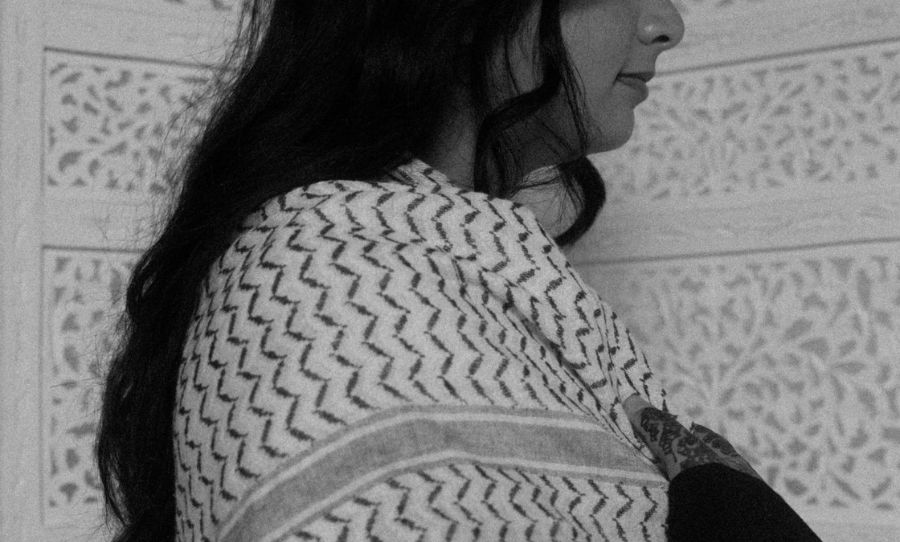
Emerging from Aotearoa with roots in Bangladesh, Sabreen has quietly been crafting a sound that is as thoughtful as it is cinematic.
Her music blends folk, indie, and Desi influences, creating an intimate yet expansive atmosphere that reflects her own multicultural upbringing. With one EP already out and a second on the way, she’s unafraid to tackle political and social issues in her songs, using storytelling as both art and advocacy.
Her latest single, ‘The End’, is a cinematic Desi-folk ballad that doubles as a love letter to Palestine, capturing universal themes of love, grief, and solidarity while highlighting voices too often ignored.
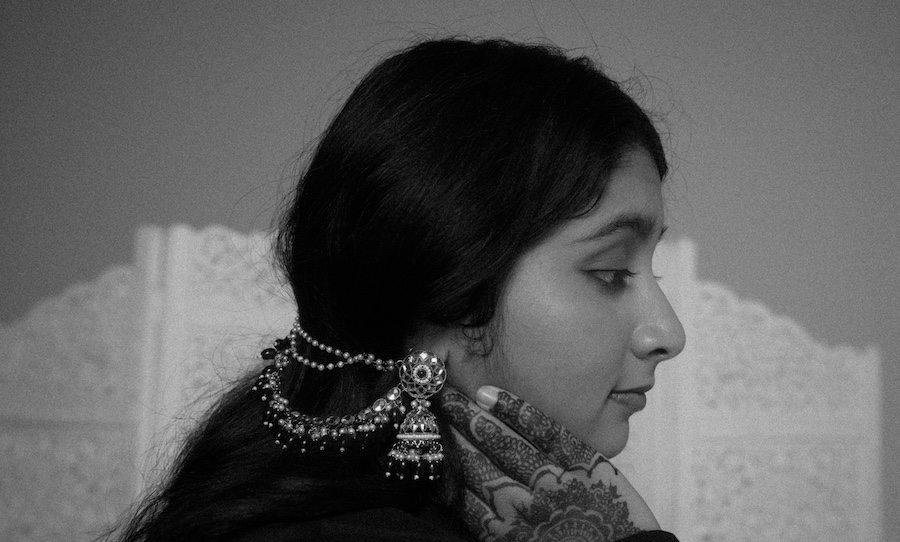
Following in the footsteps of her previous release, ‘Countryman’, Sabreen continues to fuse activism with artistry, proving that pop-inflected folk can carry weight without sacrificing heart. Today, we chat with her about culture, music, and what fuels her creativity.
HAPPY: What’d you get up to today?
SABREEN: Today was a bit more of a relaxed day for me, I dropped my dad off at the airport and then had class! My only class today was Criminal Procedure, one of my Law electives. Not a big criminal law enthusiast, but the lecturer Scott Optican is so fun and animated which makes the content interesting.
HAPPY: Tell us a little about where you’re from, and what you love about it!
SABREEN: I’m lucky to call two places home: Aotearoa New Zealand and Bangladesh. I live in Tamaki Makaurau/Auckland, and one thing I love about it is how often I get to see the sea. I get to see the sea twice a day on my commute to uni, which makes me happy even if I’m in the worst mood or if it’s an early morning. I also love all the cafes, bookstores and record stores around the city–there are some real gems if you know where to look.
As for Bangladesh, my mum is from the capital Dhaka and my dad is from Comilla. I love the ancient history of the place, the FOOD, and the vibrancy everywhere you look. I love hearing my language being spoken all around me and the glimpses of wildlife I get to see when I go back, which is just so different from NZ. I haven’t been back in a while, I miss it a lot.
HAPPY: Your new single, ‘The End,’ is described as a “cinematic Desi-folk ballad.” What inspired you to blend these specific sounds for this song?
SABREEN: I’m lucky to come from a culture with such a rich musical landscape, with so many cool instruments and sounds to play with. I love Desi music so much, from folk to indie to Bollywood, and aim to put elements from Desi musical culture into my own work to reflect my own culture. That’s why I decided to put a sitar in ‘The End’.
More than that though, with this particular song it was important to me to have it as a tribute from my own culture to Palestine, as a gesture of solidarity. I wanted to also include an Arabic Oud, a stringed instrument they play across the Levant and in Palestine, but unfortunately couldn’t find a player on time!
HAPPY: ‘The End’ is a love letter to Palestine. Can you tell us more about the passion that moved you to write this song?
SABREEN: I don’t think I’ve ever seen, in my lifetime, the world so collectively heartbroken, outraged and moved to rising up than it has been over the last two years with what is happening in Gaza. As an artist, I believe we have a unique power during these times to inspire change by telling stories that those in power want us to forget.
I felt like I needed to create to capture the moment and most importantly, tell the story of the young person whose message inspired the song. I wanted to honour their words and do something within my power to contribute to the movement rising around the world.
HAPPY: What was the most challenging part of capturing such a profound and global sense of love and grief in a single song?
SABREEN: The hardest part was definitely toeing the line between telling someone’s story and being respectful, while also trying not to take up space that isn’t mine. I didn’t go into the song with the intent to override Palestinian voices, and that’s been something I’ve kept in mind throughout the production and rollout of the song.
There is no way I could possibly capture the enormity, significance and devastation of the genocide in Gaza in a 4-minute song; instead, I tried to tell a universal story of love at the end of the world that can be read on its own, but gains so much more meaning with the added context of Palestine. Combining all of those elements was the biggest challenge.
HAPPY: Your previous single, ‘Countryman,’ shed light on a forgotten hate crime in NZ’s history. How do you see ‘The End’ continuing down that same path of storytelling?
SABREEN: ‘Countryman’ gave me the courage to write and release a song about something bigger than me, and to not be afraid of appearing “too political” or making noise for something I care about. I definitely could not have released ‘The End’ without ‘Countryman’ first, as that song lit a path for me to combine my advocacy with my music.
‘The End’ very much continues down that path of creating music for a purpose—music that tells a story that isn’t necessarily mine but is one I feel passionate about telling in the hope that a better world is possible for all of us–for Joe Kum Yung, and for the people of Palestine.
HAPPY: With one EP out and a second on the way, how has your sound or artistic vision evolved since your debut, room service?
SABREEN: It’s evolved so much, and I feel like it reflects my own personal growth as well. I still have so much love in my heart for room service–it captures a very specific, transitional time of my life so well—but I definitely feel like I’ve outgrown it now.
My artistic vision is much more refined; I’m less focused on pleasing or wowing everyone, and am now more focused on building my own community through stories that matter to me and causes that are bigger than just chronicling my own experiences (which is still fun and a part of my music, just not the whole thing).
I have a lot more courage now to pursue more niche, left-field musical ideas instead of pursuing sounds I think will be palatable for everyone. Right now, I’m much more into cinematic folk production rather than the youthful indie pop sound of room service. I’m less scared to incorporate my culture into my storytelling–and definitely less scared to piss people off in the process.
HAPPY: Artists like Hozier, Paris Paloma, and The Beths are listed as inspirations. What specifically do you draw from their work?
SABREEN: All of these artists are so special and have carved out their own niche in the music scene, sonically and artistically. The main thing I love about all of them is their storytelling, and their courage in intertwining their music with activism.
Hozier and Paris Paloma lean much more into the folk sound I love, which they use to tell the most fascinating, layered, politically important stories. The Beths just have this infectious indie pop sound that I can’t get enough of, and I love how they combine the most devastating lyrics you’ve ever heard with fun pop sounds. These are all the elements of these artists’ artistry that I try to incorporate into my own music too.
HAPPY: What are you most excited about as you look ahead to releasing your next EP?
SABREEN: I am so excited to build the world I’ve created around these songs. The aesthetics, lyrics and activism all entwine together in a way that feels so authentically who I am right now. I can’t wait to release more music videos, play more shows and maybe even press my very first vinyl. I hope it’s the start of a promising new chapter for me and my listeners.
HAPPY: Lastly, what makes you happy?
SABREEN: Good food, my family and friends, my cats, spring time, and a really good nap.