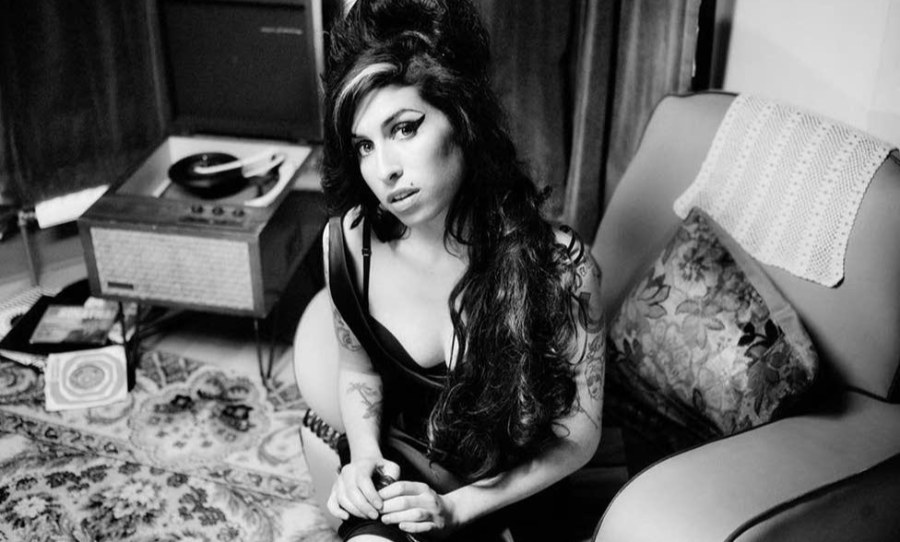
Unreleased demos, rare B-sides and Winehouse’s complete 2007 Paradiso set are being pulled from the archives.
Darcus Beese, the A&R who discovered Amy Winehouse and eventually signed her to Island Records, once said of working with her, “you’ve just got to get out of the way – and that’s what I did with Amy.”
It feels like a pretty good explanation for why Back to Black still sounds the way it does 20 years later.
Winehouse wasn’t particularly interested in being polished into somebody else’s idea of a pop star.
She already knew what the songs were supposed to be, how she wanted to sing them and, by most accounts, wasn’t especially interested in hearing otherwise.
Released in October 2006, Back to Black pulled from decades of soul, jazz and girl-group pop, but never sounded like anyone other than Amy Winehouse.
Now, two decades on, we’re getting a much closer look at how it came together.
Republic/UMe will release Back to Black: 20th Anniversary Edition on October 23, expanding the original 11-track album into a huge archival collection of demos, B-sides, rarities and live recordings.
Across 3LP clear vinyl, 3CD and digital deluxe editions, the reissue pulls together material from across the Back to Black era, including four previously unreleased demos.
Among them are early versions of ‘Back to Black’ and ‘Love Is a Losing Game’, alongside ‘I’m No Good’, the original demo for ‘You Know I’m No Good’, and ‘Fuckery’, which eventually became ‘Me & Mr Jones’.
There’s also an alternate version of ‘Just Friends’, titled ‘I’ve Been Drinkin’’, plus the demo ‘Tears Dry’ and a down-tempo take on ‘Some Unholy War’.
For anyone interested in hearing Winehouse away from the finished studio record, though, the third disc might be the real draw.
Her February 8, 2007 concert at Amsterdam’s Paradiso is being released in full on vinyl and streaming for the first time.
The 14-song set catches Winehouse right in the middle of the Back to Black run, moving through ‘Rehab’, ‘You Know I’m No Good’, ‘Wake Up Alone’, ‘Valerie’ and ‘Love Is a Losing Game’, along with older cuts including ‘Fuck Me Pumps’ and ‘I Heard Love Is Blind’. There’s even a detour into Lauryn Hill’s ‘Doo Wop (That Thing)’ during ‘He Can Only Hold Her’.
The digging doesn’t stop with the music.
The physical editions come with alternate cover artwork, previously unseen photos by original album photographers Mischa Richter and Alex Lake, an image of Winehouse’s handwritten lyrics pulled from Mark Ronson’s archive, and new liner notes from Ronson and Salaam Remi.
There are also standalone editions of the original album, including a ‘Chalkboard Marble’ pressing and a webstore-exclusive zoetrope vinyl featuring moving footage of Winehouse as the record spins.
It’s an appropriately deep dive into an album whose influence has only become clearer with time.
Back to Black eventually reached number one in the UK, became the country’s best-selling album of 2007 and has since shifted more than 25 million copies worldwide.
Winehouse’s run culminated in five Grammy wins in 2008, including Record and Song of the Year for ‘Rehab’.
Mark Ronson, who produced six of the album’s tracks, has described their creation as a period of intense musical infatuation.
Twenty years on, very little about Back to Black feels stuck in 2006.