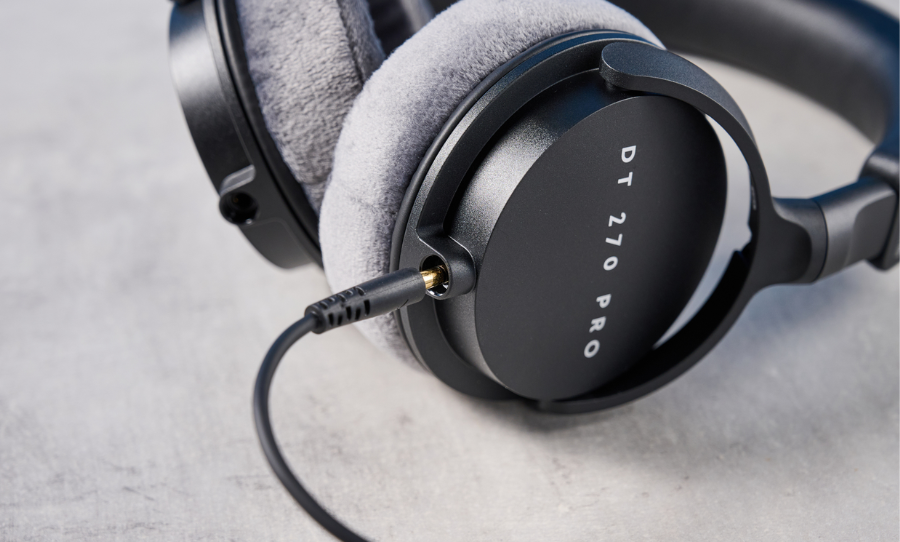
A compact closed back headphone that carries Beyerdynamic’s studio sound into smaller modern setups.
Studio headphones tend to fall into two camps. There are the oversized pairs built for control rooms, and then there are the ones that quietly live on desks, ready whenever a session drifts into editing, tracking or late night listening. The DT 270 Pro from Beyerdynamic feel firmly in the second category.
At first glance they carry the familiar Beyerdynamic language. Soft velour pads, a padded headband and the closed back construction that has defined many of the company’s studio models over the years. The difference here is scale. The DT 270 Pro are noticeably lighter and more compact than many traditional studio headphones, something that immediately suggests they were designed for movement between setups rather than living permanently beside a mixing console.
That portability lines up with the way many sessions unfold now. A track might begin at a desk through monitors, move to headphones while editing or arranging, and end with a quick reference check before it is sent out. Headphones like the DT 270 Pro sit comfortably within that flow. They are not oversized reference cans meant only for a control room, but something that can move easily between laptops, interfaces and smaller studio spaces.
The drivers themselves aim for a balanced monitoring profile rather than an exaggerated listening curve. The goal is clarity rather than spectacle. In practice that means enough low end to judge bass information while keeping the midrange clear for vocals, guitars and keys. It is the sort of tuning that makes sense in a studio context, where headphones are often used as a second perspective rather than the main monitoring system.
Closed back headphones also remain important for recording work. Isolation helps prevent sound from leaking into microphones during vocal takes or acoustic sessions, while outside noise is reduced enough that details remain audible even when a room is not perfectly silent. That balance makes headphones like the DT 270 Pro useful not only for mixing and editing but also for tracking situations where separation matters.
Another detail that reflects the modern studio environment is how easily they connect to different devices. Moderate impedance keeps them practical with audio interfaces, laptops and portable gear without needing dedicated amplification. For producers who move between setups during the day, that flexibility can matter more than raw power handling.
Comfort plays a quiet but important role as well. Velour pads and the relatively light frame help reduce fatigue across longer listening sessions. It is one of those details that often goes unnoticed at first but becomes essential once hours start passing in front of a session.
In the end the DT 270 Pro do not try to reinvent studio monitoring. Instead they refine a familiar idea. A clear closed back headphone that keeps the focus on listening rather than spectacle. For producers who move between spaces, devices and working styles, that straightforward reliability can be exactly what is needed.
Check them out here.