A Japanese tech-art collab is finally making one of the fastest sports watchable
I don’t fully get fencing. I like it – I think – but it’s always felt a bit out of reach. Fast, kind of confusing, and if we’re being honest, a little bit bougie.
Two people in white suits moving at lightning speed, a beep goes off, a light flashes, and everyone else seems to understand what just happened except you.
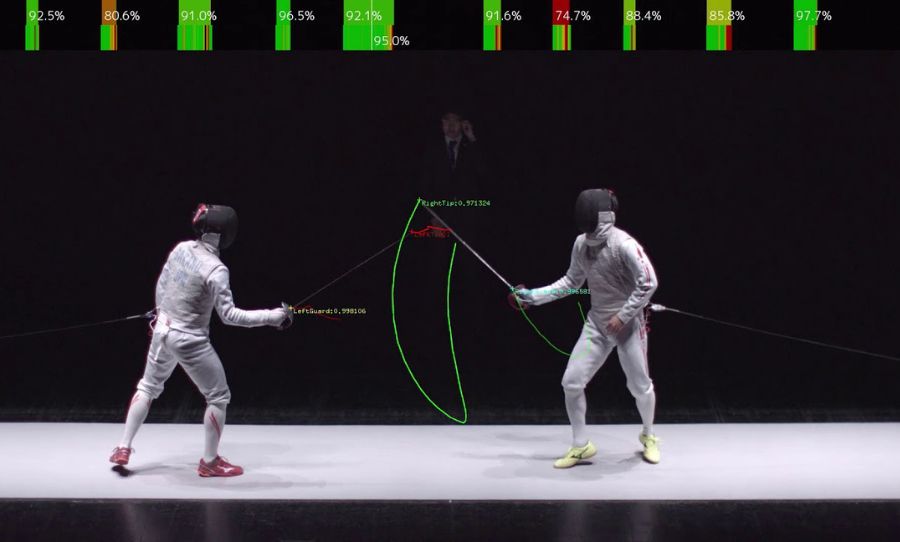
Japanese engineers developed a “Sword Tip Visualization System” for the Fencing World Championships, and it makes fencing look absolutely incredible to watch
by
u/Geto_Sugru in
BeAmazed
But thanks to this new AI tech? It actually mall makes sense.
A new project from Japanese tech-art studio Rhizomatiks, led by Daito Manabe, alongside Dentsu Lab Tokyo, is rethinking how the sport is watched – not by slowing or dumbing it it down, but by making the invisible parts visible.
It’s called the Fencing Visualized Project, and it basically turns live matches into something that looks closer to a video game (or a low-key Star Wars duel).
At the centre of it is AI-powered tracking that follows both the fencers and their blades in real time.
sportAs the match plays out, the system overlays a glowing trail behind each sword, mapping every movement. Feints, parries, those tiny wrist flicks that usually go unnoticed – suddenly you can actually see what’s happening.
If you’ve ever tried to get into fencing, you’ve probably hit the same wall: “right of way.”
It’s one of the sport’s core rules, especially in foil and sabre, and it decides who gets the point when both fencers land hits. It’s also notoriously hard to follow unless you know exactly what you’re looking for.
This system tackles that head-on. Using AR overlays, it shows who currently has attacking priority in real time — basically giving you a live cheat sheet for how the referee is reading the bout.
And suddenly, it’s not confusing anymore.
In some setups, the tech goes a step further by pulling in biometric data like heart rate, displaying it live during matches.
So while the action’s playing out, you’re also seeing how each fencer is handling the pressure — whose pulse is spiking, who’s staying steady.
It adds a human layer that fencing broadcasts have never really had.
The system was rolled out as part of the World Fencing League launch in April 2026, which is clearly aimed at making the sport more watchable for a broader audience.
And it works.
For years, fencing has felt like a sport where you only see the outcome, not the process. This flips that. You see the movement, the intent, the split-second decisions — all the stuff that actually makes it interesting.
So yeah, maybe fencing isn’t just for the upperclass crowd after all.
Turns out, it just needed better visuals.