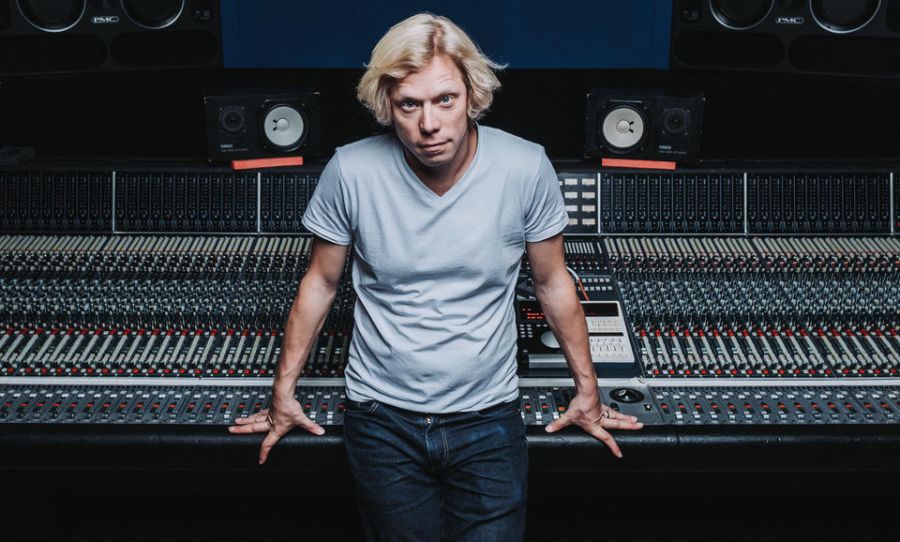
Needle In The Hay judge Adrian Breakspear discusses studio psychology, perfectionism, Gang of Youths, and the art of making great records.
Adrian Breakspear has spent decades helping shape the sound of Australian music.
From his Grammy-nominated work with Gang of Youths to sessions with artists as varied as Ricky Martin and Pharrell Williams, the Sydney-based producer, engineer and mixer has built a reputation as one of the industry’s most trusted ears.
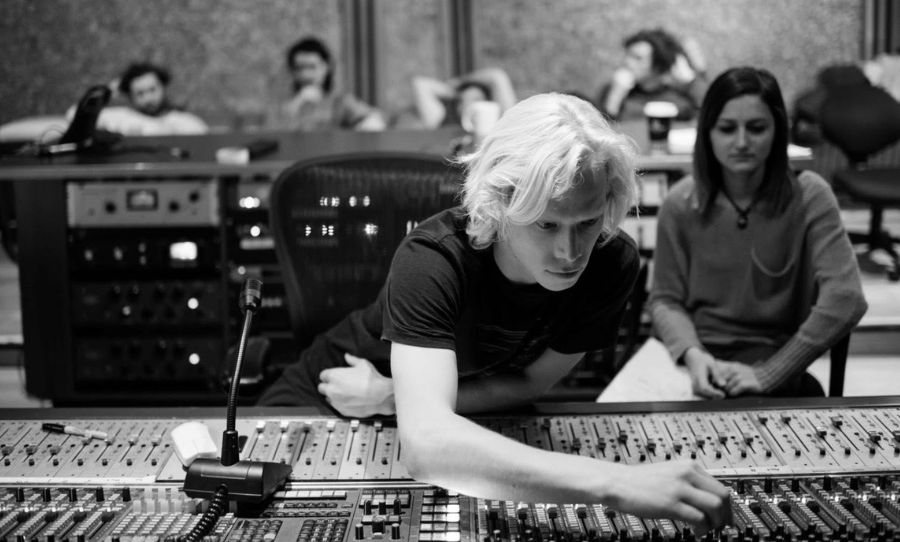
As one of this year’s Needle In The Hay judges, Breakspear knows exactly what separates a promising demo from a career-defining record.
We caught up with him to talk studio psychology, perfectionism, the state of Australian indie music, and why a great song still gives him the same buzz it did when he first stepped into a recording studio.
HAPPY: What are you up to today?
ADRIAN: It’s a Tuesday; today I was mixing a song from a live album for a fairly well known Sydney band, planning my upcoming UK trip and other sessions.
I usually spend the first half of Monday on admin and planning, but this weekend I was recording with a young band, so Monday was spent out of the studio on family tasks,
HAPPY: Tell us a little bit about where you live and what you love about it.
ADRIAN: I live in Manly, a stone’s throw from the beach.
It’s about as far as you can get from the London suburb I used to live in – I love the outdoors lifestyle, that it’s not in the city whilst still being connected, and that I can walk out of my house, into the park behind it and bump into every local I’ve ever met.
HAPPY: You’ve worked across everything from massive Gang of Youths records to emerging indie bands finding their sound – what usually tells you a project has something special early on?
ADRIAN: I don’t think there’s any one thing, although often with a great song I feel I can hear the finished product shining through the rough demo.
At the same time, some projects take a longer period to show their potential – it really does depend!
Perhaps the voice is one thing that is pretty evident from the start if it’s going to sell the song, or if it’s going to be something we’re going to have to work on.
HAPPY: You’ve worked with artists at very different stages of their careers. Does your approach change depending on whether a band is brand new or already established?
ADRIAN: It can do. I always try to respect the wishes of a band new to recording, but also it’s more usual that I’ll be the one dictating the pace and approach.
With a more established band, it’s likely that they’ll know how they like to work.
Whilst I might suggest doing things differently, we’d probably adapt their usual approach rather than do things “my” way from the start, unless there’s an indication that they want to change things or are keen to explore different methods.
HAPPY: What separates a good live band from a band that can actually make a great record?
ADRIAN: Ideally nothing! The best live bands approach the studio with the ethos of their live sound but a willingness to develop it, and often that then seeps back into the live set.
It’s great when a previously non-singing member steps up to backing vocals or plans are made for additional musicians or backing tracks (where appropriate) to enhance the show.
There’s also sometimes an element of star quality or “X-factor” – how many times have we heard the story of the guitarist or singer who “should be a star”, but when you actually see them, they’re good but missing that final captivating piece of the puzzle, or the band that’s engaging live but really doesn’t have the songs or originality to make the step to the next level.
(That said, I do work with an unsigned singer/guitarist who really SHOULD be a star, he’s that captivating!)
HAPPY: What’s something artists often overthink in the studio that actually matters way less than they think?
ADRIAN: I think sometimes people forget that the listener only hears the end result.
Yes the process will most definitely shape that result, but no-one is going to know or care if you fixed a mistake, moved something that was out of time or tuned the odd vocal note.
It’s ok to “cheat” sometimes – arguably the whole concept of multitrack recording is “cheating”, it’s all an illusion, so don’t compromise the end result on principle, or adherence to a process.
HAPPY: Has your relationship with “perfection” changed over time as an engineer and mixer?
ADRIAN: As mentioned above, I’m definitely a perfectionist; I need to “let go” more often!
I’m not very good at listening to anything I’ve just finished and being satisfied, so sometimes I do have to say to myself “the artist is happy, it’s good, let it go”!
And then I listen a couple of months later and it’s fine and I can’t even remember what I was obsessing about.
HAPPY: How important is the physical studio environment to the psychology of making a record?
ADRIAN: I think it’s really important the artist feels at home enough to relax and not feel any sort of tension.
Obviously having a studio where all the equipment works and there’s no noise issues or similar is important too, but we’ve all been in studios which are technically amazing but intimidate the artist or make them feel uncomfortable.
Personally I also like good lighting – I find dark studios fatiguing!
HAPPY: Is there a production choice you’ve made on a record that completely changed the direction or identity of a song?
ADRIAN: I wouldn’t claim “completely changed the direction”, but with Gang of Youths’ ‘Achilles Come Down’, initially Dave wanted the song to be just his voice, the vocal samples and a string quartet (a slightly unconventional string quartet in that it’s two cellos and two violins, no viola).
I really felt it would feel more connected to the rest of the album if it had more elements from the rest of the band, so I worked hard to encourage Joji and Jung to add guitar atmospherics and programming to it, and I added some elements myself.
Actually apart from the interludes and the almost acoustic title track, it’s the one song on the album where I did absolutely everything – all the engineering and I mixed it too (the ten rockier tracks on the album were mixed by Peter Katis, and the other full song I mixed, ‘Our Time is Short’ was tracked by another engineer using my setup, when the band extended a studio session for a couple of days and I was unavailable).
Thanks in part to TikTok support, it’s the band’s biggest song so far, and I definitely feel the additional elements increase the emotional depth and support the message of the song.
HAPPY: Are there particular microphones, consoles, tape machines or outboard pieces you continually come back to because they shape performances in a certain way?
ADRIAN: I’m a bit of a mic hoarder; like all engineers I’ve got my favourites and I’ve built up a bit of a collection, so I can pretty much walk into any studio and have my tools ready to go.
My overall fave is my Wagner U47w vocal mic – it’s pretty much a recreation of a “new” Neumann U47, and whilst a little cheaper than an original, was a decent investment, but I use it on just about every session.
Very easy to record a “finished” sounding vocal on it.
HAPPY: A lot of younger artists are recording at home now. What’s one piece of gear, technique or mindset you think genuinely makes a difference regardless of budget?
ADRIAN: I’ve got a few! Being aware of the recording space – it’s tricky to remove an awful sounding room from a great vocal. Phase – self recording drums well is hard, partly because of the room needed but also partly because of the phase relationship between mics.
If you’ve got poor sounding close mics that can often be helped with samples; poor sounding overheads mean you’re probably redoing or relying on programming for your drums.
Lastly, not overdoing things – like over-tuning vocals, recording guitars with 4 mics when one well placed will do, making sure every part has its place and being ruthless with things that don’t fit.
If someone says to me “let’s keep it but turn it right down” I’ll usually say “do we need it at all?”.
HAPPY: Australian indie and alternative music feels like it’s in an interesting place right now – what’s exciting you most about the current wave of artists coming through?
ADRIAN: I think the overall standard is pretty high, which is a great thing – rarely do I hear a band on Triple J or an editorial playlist and wonder why it’s getting attention.
There’s some great unique voices too – I recorded a very young band over a weekend recently, and it was almost like a return to the golden era of grunge – it’ll sound a bit more modern once the mix is finished, but the raw tracks could have been undiscovered Silverchair or similar.
View this post on Instagram
HAPPY: Do you still get surprised by records? What’s been the last session or artist that genuinely challenged the way you think about making music?
ADRIAN: I think much of the time, for me it’s an evolution rather than a revolution.
In my past in the UK (and even when working in-house at Sony) I assisted a wide variety of other producers and engineers, and I think I saw every working method (good and shall we say dubious?!) imaginable, so I think if someone came into a session and worked in a unique way now, it’d be surprising in itself!
I don’t really want to touch on AI music significantly, but one thing I have seen is non-producing artists using it as an inspirational tool – feeding it a melody, lyrics and chords and then using it to generate style inspirations, and as a producer we can use that as a starting point, and make a “better” version of the AI generated track.
I don’t really see that as any different than working from a band’s demo or similar, and if it helps the artist get closer to their vision, that’s a good thing right?!
HAPPY: How do you know when a mix is finished?
ADRIAN: I think I’m getting better at that, but I’m often the one doing “just one last revision,” after the artist is happy!
I usually send off the first pass when I find myself just listening through and through without changing anything – at that point, it’s usually a quick break, a final listen and then over to the artist, manager or label.
Then once the artist has suggested revisions and is happy, if there’s time I’ll leave it a couple of days, and have one last car listen and check.
It’s not totally unheard of for me to hear the final master and want to change or fix something, but fortunately I have a good relationship with my usual mastering engineers so that if they do need to run the pass again, it’s not usually an issue!
HAPPY: After all these years in studios, what still gives you that feeling of excitement when starting a new project?
ADRIAN: It’s kind of a boring obvious answer, but hearing a great performance of a great song.
When that’s the case, you immediately hear all the places you want to take it, or could take it, and then I can’t wait to get started.
HAPPY: What makes you happy?
ADRIAN: Outside of music and the above – family, cats and dogs (don’t make me choose), good coffee (shoutout to Mulatto Coffee in Manly!), skiing, Manchester United having had a decent season for a change, and talking about myself so thank you for the opportunity!