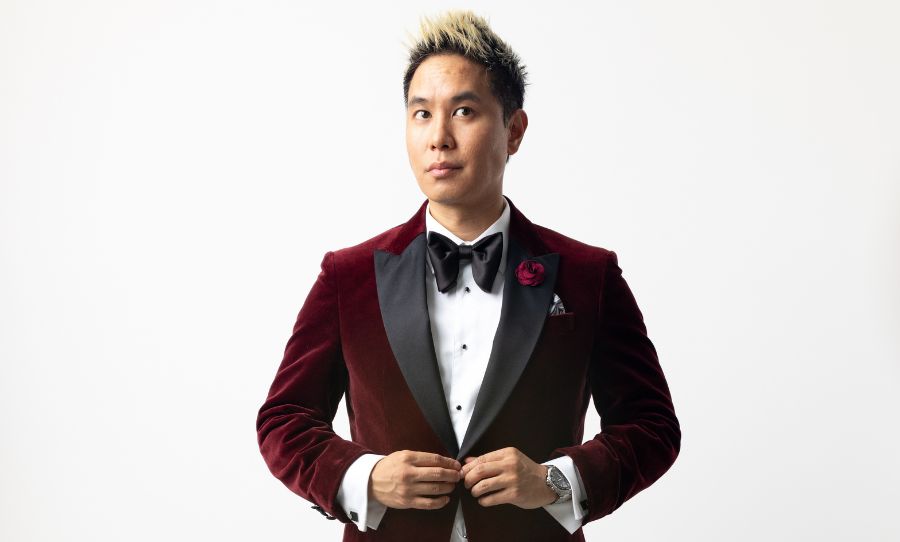
Long before K-pop became a fixture on Australian radio and sold-out stadium tours, Andy Trieu was already paying attention.
Over the past decade, the presenter, producer and SBS personality has become one of Australia’s most recognisable voices in Asian pop culture, interviewing everyone from BTS and BLACKPINK to Stray Kids and SEVENTEEN along the way.
As one of this year’s Needle In The Hay judges, Trieu brings a unique perspective on what helps artists cut through in an increasingly crowded digital landscape.
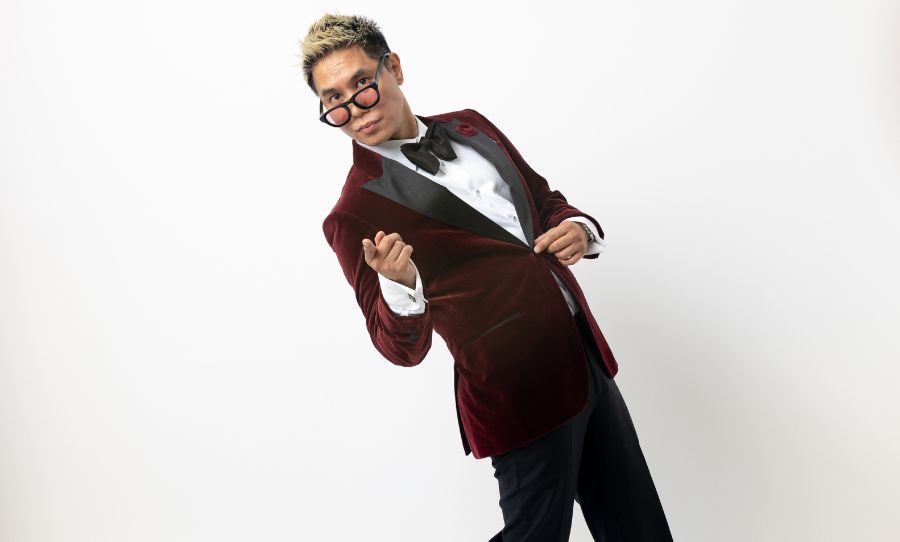
We caught up with him to talk K-pop’s rise from niche fandom to global force, the artists who left a lasting impression, and why authentic storytelling still matters more than ever.
HAPPY: What are you up to today?
ANDY: Today I’m in post production on a K-pop interview I filmed in Seoul with a virtual idol group.
Between emails and planning upcoming shoots, it’s one of those days where I’m bouncing between the creative and business sides of what I do.
HAPPY:Tell us a little bit about where you live and what you love about it.
ANDY: I live in Sydney and honestly, I don’t think I’ll ever get tired of it.
It’s one of those rare cities where you can be surrounded by world class film, music and creative industries while still being close to diverse food, pickleball and incredible harbour views.
As someone who works across media, entertainment and content creation, I love that there’s always something happening.
HAPPY: You’ve become one of Australia’s most recognisable voices in K-pop / Asian pop media. Did you always imagine yourself working in this world?
ANDY: Not at all. When I finished university, I thought I’d end up somewhere in the corporate world while continuing to pursue martial arts and stunt work on the side.
Looking back, my career has been anything but planned.
HAPPY: A lot of the opportunities came from building genuine relationships and saying yes to experiences that sounded exciting.
Hosting shows like Kitchen Whiz opened doors into television and presenting, which eventually led me to network projects on ABC, TEN, NINE and SBS.
At SBS I found myself interviewing some of the biggest artists in Asia and connecting with audiences who were very passionate about the music.
It all happened quite organically, but I’m incredibly grateful it did.
HAPPY: K-pop moves at an intense cultural and online pace. How do you keep up without burning out?
ANDY: I love the music, the visuals, the performances, the fandoms and the sense of community that exists around Asian pop culture.
A lot of the time it doesn’t feel like work because it’s something I’d be paying attention to anyway.
That said, I’ve learned over the years that you can’t be online 24/7. No one can keep up with everything.
These days I focus on the stories, artists and moments that genuinely excite me rather than trying to cover every single update.
Having interests outside of K-pop helps too.
Whether it’s sport, travel, film, martial arts or spending time with friends, stepping away from the industry is often what allows me to come back energised and excited about it again.
HAPPY: Was there a specific moment when K-pop stopped feeling like an online subculture and started feeling fully embedded in mainstream pop culture?
ANDY: There were definitely signs before it happened.
I remember the excitement around BIGBANG’s Australian shows in 2015 and seeing just how passionate and organised the fan community already was.
But for me, the real turning point was BTS during the Dynamite era.
Suddenly you were hearing K-pop on mainstream radio, seeing it dominate charts around the world and watching artists appear on major television programs that previously wouldn’t have given the genre much attention.
What really stood out was seeing people I’d never expect become fans.
Friends, family members and colleagues who had never shown any interest in K-pop before were suddenly talking about BLACKPINK, TWICE or BTS.
That’s when it felt like the genre had moved beyond a niche community and become a genuine part of global pop culture.
HAPPY: You’ve interviewed some huge artists over the years. Is there one conversation or interaction that’s really stayed with you?
ANDY: What stays with me most is having the opportunity to follow artists throughout different chapters of their careers.
I’ve been fortunate enough to speak with Stray Kids’ Bang Chan and Felix multiple times over the years.
It’s been incredible watching them grow from rising artists into global superstars.
The pressure is enormous, yet they continue to push forward creatively while staying connected to their fans.
I’ve also had the privilege of speaking with some of the artists who helped shape modern K-pop, including Daesung from BIGBANG and Park Bom and Minzy from 2NE1.
Hearing them reflect on their journeys, the highs, the challenges and everything in between, reminded me that success in the creative industry is rarely a straight line.
One of the most rewarding parts of my career has been watching artists evolve over time.
I interviewed SEVENTEEN when they first debuted and then had the chance to speak with them again as they became one of the biggest groups in the world.
Seeing that growth firsthand is special.
Another artist who stands out is DPR IAN. I remember speaking with him in the early days about his vision for DPR and the creative world he wanted to build.
To see those ideas come to life and resonate globally has been amazing.
And of course, BTS will always hold a special place in my heart.
I was lucky enough to spend time with them before they became the global phenomenon they are today.
What struck me wasn’t their fame, but how genuine and personable they were.
Looking back now, knowing what they’ve gone on to achieve, I’m incredibly grateful for those moments.
HAPPY: What do you think people outside of K-pop still misunderstand about the genre or its fan culture?
ANDY: When people think of K-pop, they often picture idol groups, but there’s so much more to it.
You have incredible hip hop artists, R&B musicians, indie bands, singer songwriters, drama OSTs and experimental producers all contributing to the scene.
I also think people underestimate how passionate and knowledgeable the fan community is.
Fans aren’t just consuming music. They’re building communities, organising events, learning languages, travelling internationally and supporting artists in incredibly creative ways.
What’s also fascinating is how K-pop has influenced Asian pop culture more broadly.
Its success has opened doors for artists across Korea, Japan, Thailand, Vietnam and many other countries to reach global audiences.
It’s become a cultural bridge that connects people from all over the world.
HAPPY: Australian K-pop fandom feels massive right now. Have you noticed the scene changing locally over the last few years?
ANDY: Absolutely. I’ve been attending K-pop concerts in Australia since around 2014, and the difference today is incredible.
Back then, getting a K-pop act to Australia felt like a special occasion.
Now we’re seeing multiple tours every year, bigger venues and larger audiences than ever before.
When artists like BTS and Stray Kids are selling out stadiums, it shows just how far the scene has come.
What’s changed most is the diversity of the audience.
K-pop fandom in Australia is no longer concentrated within a niche community.
You’ll see people of all ages and backgrounds at concerts.
The music has become part of mainstream culture.
HAPPY: You’ve worked across presenting, interviewing and digital content. What do you enjoy most about being on camera?
ANDY: Whether I’m interviewing someone like Donnie Yen, Simu Liu or a K-pop artist I’ve admired for years, there’s no room to be distracted.
You’re listening, reacting and connecting in real time.
I also genuinely enjoy the performance aspect of it. I studied acting and spent years working in television, so being on camera feels like a natural extension of that creative side of myself.
Every shoot, interview or live event is a little different and requires you to adapt, think on your feet and bring energy to the moment.
There’s definitely pressure involved, but I’ve always enjoyed that.
HAPPY: Is there an artist or group that completely surprised you once you saw them live or met them in person?
ANDY: One group that immediately comes to mind is i-dle.
I first met them back in 2019. They’ve continually reinvented themselves, taken creative risks and developed some of the strongest concepts in K-pop.
Seeing their confidence, artistry and stage presence evolve has been fascinating.
What’s most impressive is that they’ve managed to stay authentic while constantly pushing themselves creatively.
Every era feels distinct, but it still feels unmistakably like them.
HAPPY: K-pop idols are often expected to be incredibly polished. Do you think audiences are starting to connect more with vulnerability and personality now too?
ANDY: The polished side of K-pop will always be part of its appeal.
The artists who seem to resonate most are often the ones who can balance both worlds.
They can step onto a stage and deliver a flawless performance, but they can also be honest, funny, vulnerable and relatable when the cameras are off.
At the end of the day, people connect with people.
Talent might attract an audience, but personality is often what makes them stay.
HAPPY: What separates a great K-pop performer from a truly unforgettable one?
ANDY: There are plenty of talented performers with great vocals, incredible dance skills and strong stage presence.
That’s the baseline at the highest level of K-pop.
The artists who become unforgettable are the ones who live and breathe their craft.
You can feel it when you speak to them.
They’re constantly thinking about music, performance, storytelling and how to create something meaningful for their audience.
I’ve had the chance to meet artists like Taemin from SHINee, who is completely dedicated to pushing himself as a performer.
Watching his commitment to music, dance and artistic growth is inspiring.
The same goes for artists like Kai from EXO, who seems to radiate confidence and passion every time he steps on stage.
I’ve also always been impressed by TWICE.
Despite their incredible success, they’ve maintained a warmth and connection with fans that feels genuine.
HAPPY: Social media has changed music journalism and fandom a lot. Has it made your job more exciting, more difficult, or both?
ANDY: Definitely more exciting.
One of the most fascinating things about K-pop is that it embraced direct fan communication long before much of the entertainment industry caught on.
Artists were creating behind the scenes content, livestreams and fan communities years before it became standard practice elsewhere.
Today, fans can engage with artists from almost anywhere in the world in real time.
They can discover a new song, watch a performance, join a livestream and share their reactions within minutes.
As someone who creates content, it means there are more opportunities than ever to tell stories and connect fans with the artists they love.
The pace is definitely faster and there is a constant flow of content, but that’s also what makes it exciting.
HAPPY: Are there any newer or emerging acts you think deserve way more attention right now?
ANDY: Vietnamese pop music, in particular, has been growing rapidly and producing some incredible artists with global potential.
It’s been fascinating to watch the influence of K-pop help open doors for artists across Asia while still allowing them to develop their own unique identities and sounds.
I’m also excited by the number of independent and alternative artists emerging throughout the region.
Whether it’s hip hop, R&B, indie pop or experimental music, there are so many talented creators building passionate audiences without necessarily following the traditional idol path.
I’m also excited about the next generation of Asian Australian, Asian American and Asian artists who are creating something entirely their own.
View this post on Instagram
HAPPY: After covering this world for so long, what still excites you most about K-pop?
ANDY: Honestly, it’s the people.
Even after all these years, I still get excited whenever I have the opportunity to reconnect with an artist I’ve interviewed before.
Whether it’s Steve Aoki, Monsta X, ATEEZ, Epik High, Red Velvet, Jessi or countless others, there’s always a sense of anticipation because you never know what new chapter they’re entering.
One of the great privileges of this job is being able to witness an artist’s journey over time.
You get to see how they’ve evolved, what they’ve learned and what they’re passionate about now compared to a few years ago.
For a brief moment, you’re invited into their world and trusted to help tell their story.
That’s something I never take for granted.
Sometimes I still have moments where I stop and think, “How did my life lead me here?”
And honestly, I feel incredibly grateful that it did.
HAPPY: What makes you happy?
ANDY: Some of my happiest moments have come from being part of great production teams, working alongside talented friends and collaborating on projects that we’re genuinely passionate about.
Whether it’s filming an interview, hosting a live event or creating digital content, there’s something really special about building something together and seeing it come to life.
Seeing an idea go from a conversation, to a shoot, to a finished piece of content that connects with people is incredibly rewarding.
Growing up, I was inspired by entertainers like Jackie Chan and the people I saw on screen who could make audiences laugh, think and feel something.
In many ways, I’ve spent my career chasing that same feeling.
At the end of the day, if I can do that while working with good people and have a bit of fun along the way, I’m pretty happy.