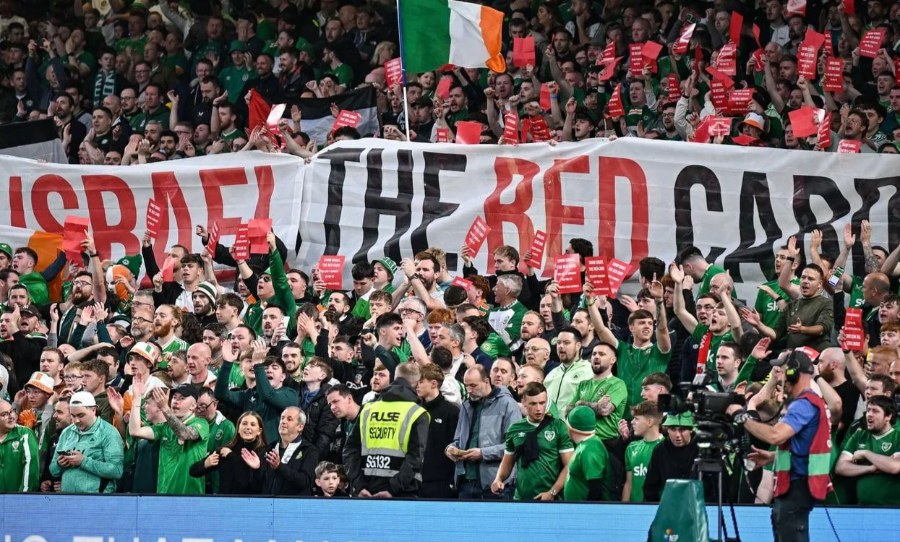
The games will go ahead at neutral venues, but Irish supporters will not be there to watch them.
The Football Association of Ireland has confirmed it will not sell or facilitate tickets for Republic of Ireland supporters for either of the team’s upcoming Nations League fixtures against Israel.
The FAI cited “operational challenges and safety and security concerns” behind the decision, which leaves Ireland playing two politically charged international matches without its travelling support.
The first fixture, technically Israel’s home game, will be played at the Nagyerdei Stadion in Debrecen, Hungary, on September 27.
The Israeli Football Association is expected to accommodate a small number of its own supporters, but no away allocation will be made available through the FAI.
Ireland’s home fixture on October 4 has already been moved from Dublin to the TSC Arena in Bačka Topola, Serbia. That match will be played entirely behind closed doors after the FAI warned that operational issues could affect its delivery on Irish soil.
The result is a strange compromise: the matches go ahead, the supporters stay home, and the argument surrounding them remains very much alive.
The FAI has faced months of pressure to boycott the games over Israel’s military campaign in Gaza.
The Stop The Game campaign has brought together footballers, musicians, actors and supporters, while Sinn Féin and other political figures have also backed calls for Ireland to refuse to participate.
In July, however, 68 per cent of delegates at an extraordinary FAI meeting voted to endorse the board’s decision to fulfil the fixtures.
The association argued that forfeiting them would cost Ireland six points, damage its international ranking and potentially lead to further UEFA disciplinary action.
The FAI also told members that the financial impact of a boycott would begin at around 5.5 million and could rise as high as 10.3 million — money it says would otherwise support clubs, youth development and football programs across Ireland.
Still, allowing a limited number of Israeli supporters into the Debrecen fixture while shutting Irish fans out is unlikely to quieten the backlash.
For campaigners, moving the games and emptying the stands does not address the larger question: whether the matches should be played at all.