SlapMac is part of a much bigger vibe-coding wave than you might think
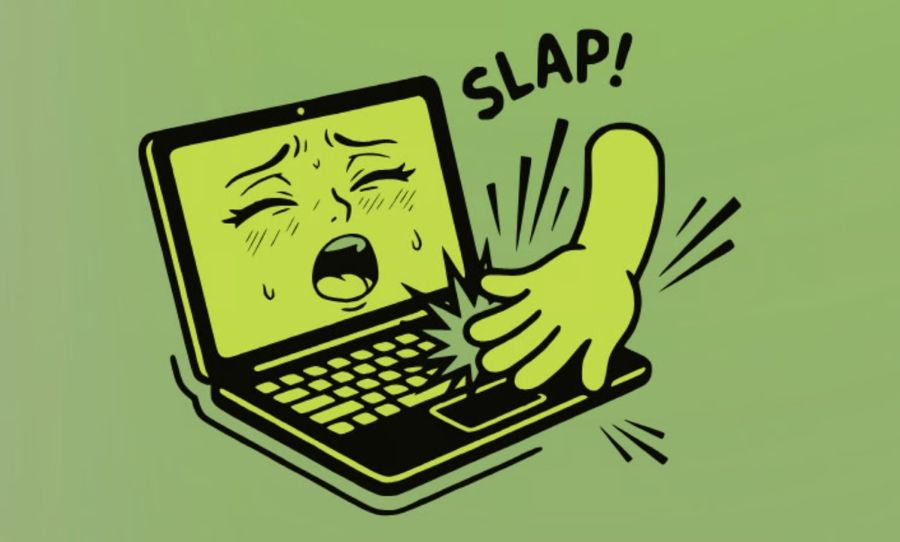
The ‘SlapMac’ story is the perfect example of vibe coding: building software by focusing on the “vibe” and user experience while letting AI handle the heavy lifting of the actual code.
The creator, Tonnoz, saw a viral GitHub repo, used Claude Code to turn it into a polished app in just 48 hours, and did $5,000 in revenue in his first 3 days by charging $5 a pop.
Here are five other examples where people used AI or “vibe coding” to strike it rich.
USB Moaner
Following the “SlapMac” success, Tonnoz didn’t stop at the initial $5,000. Using the same vibe coding workflow, he rapidly iterated to add a “USB Moaner” mode and a “Fighting Game Combo” mode.
By submitting error messages back to the AI (the “Karpathy Move”), he added features where slapping the laptop triggered a “DOUBLE SLAP!” commentator voice and screen flashes.
This “hyper-niche, disposable software” model proved that in 2026, speed and “fun factor” are often more profitable than complex utility.
View this post on Instagram
UpScrolled
UpScrolled was built as a quiet rebellion against algorithm-heavy social feeds.
Instead of optimising for engagement, it simply shows posts in chronological order from people you actually follow — no ranking, no manipulation.
A small team used Bolt.new and Vercel v0 to rapidly prototype the interface, leaning into a stripped-back, almost 90s web aesthetic that felt intentionally human.
That simplicity became its identity. As users grew tired of algorithm fatigue, UpScrolled started gaining momentum in early 2026, positioning itself less as a “new social network” and more as a reset button for how social apps should feel.
View this post on Instagram
Spookseek AR
Spookseek AR started as a playful experiment from a designer who wanted to turn their apartment into a haunted house using nothing but their phone.
With no background in AR development or 3D math, they leaned on Replit Agent during a 2026 buildathon to handle the heavy technical lifting — from spatial tracking to ghost placement.
The focus wasn’t precision engineering, but atmosphere: jittery visuals, unpredictable “ghost” behaviour, and a slightly broken, eerie feel.
That roughness actually became the hook. When it hit TikTok, users loved how unsettling and scrappy it felt, like a haunted filter that sometimes got too real.
LogosAI
LogosAI was built around a simple frustration: branding is expensive, slow, and often overcomplicated.
The idea was to let anyone describe the “vibe” of a business and instantly generate a full brand kit — logo, colours, typography, everything.
Using Lovable.dev, the founder spun up the entire product in an afternoon, including Stripe integration, without traditional design or backend work.
It quickly found traction with non-technical founders on Product Hunt who just wanted something that looked polished enough to launch.
Within a month, it had already hit $2,000 MRR, largely because it made “good design” feel instant rather than negotiated.
TraceX Guard
TraceX Guard taps into a very modern kind of anxiety: the feeling that you’re being tracked without knowing it.
It’s a privacy app that scans for hidden Bluetooth trackers or suspicious connections and then responds with loud, custom alerts that feel more like a spy film than a utility tool.
Built in early 2026 using Claude Code and Windsurf, the developer focused less on low-level Bluetooth engineering and more on the experience of feeling “protected.”
That framing worked. Once released, it spread quickly on social platforms as a kind of “paranoid but aesthetic” security tool, turning a dull problem into something that felt dramatic, even fun.