You wouldn’t want to damage your car and certainly wouldn’t want to damage your microphone, but when it comes to audio ‘damage’ takes on an entirely different perspective.
And thanks to the technicians at HOFA, enjoy yourself in the process.
For those who don’t know, HOFA is an established German pro audio company, founded in 1988, with the HOFA-Plugins division existing since 2010. They are known for developing precision-focused plugins and studio tools from their base in Germany for engineers and producers worldwide.
Today our mix benefited from the HOFA Colour Saturator and while there’s no shortage of saturation plugins promising analogue warmth, this delightful UI and its algorithms will be revisited time and again.
Most saturators do one thing well, maybe two, and rely on a familiar formula of drive in, tone tweak, drive out. HOFA Colour Saturator takes a very different approach. Instead of asking how much saturation you want, it asks a more interesting question. Where do you want it.
Built around neural modelling and a genuinely flexible spectral control system, Colour Saturator feels less like a traditional distortion plugin and more like a tonal shaping tool that happens to do saturation extremely well.
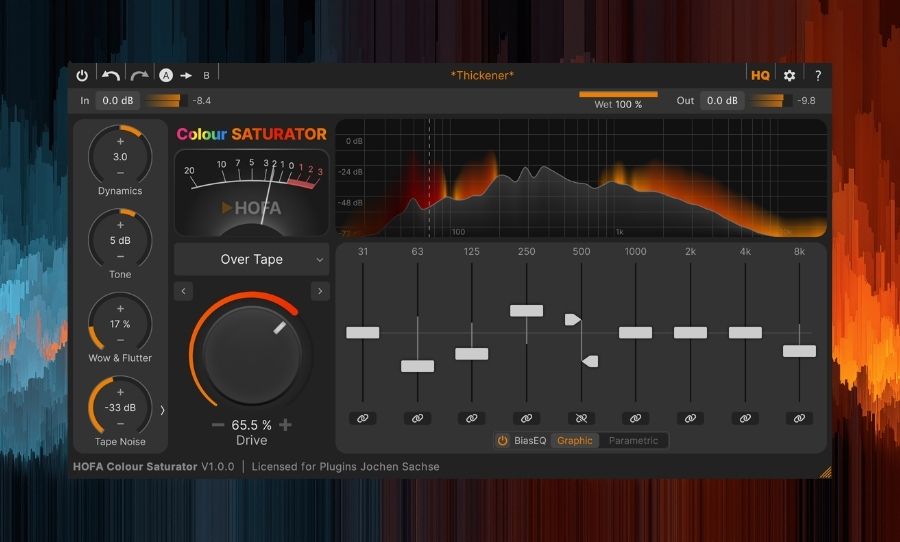
At a glance, Colour Saturator is inviting rather than intimidating. The interface is clean and logical, with a clear signal flow from left to right. Input shaping, saturation engine, spectral biasing, and output control are all visually separated, which makes it easy to understand what is happening to your signal at every stage.
The promise is broad. Subtle analogue warmth, punchy enhancement, creative destruction, and full blown fuzz are all on the table. Crucially, it never feels like one of those plugins where everything lives behind a single drive knob. This is about intention, not brute force.
Neural modelling that actually matters
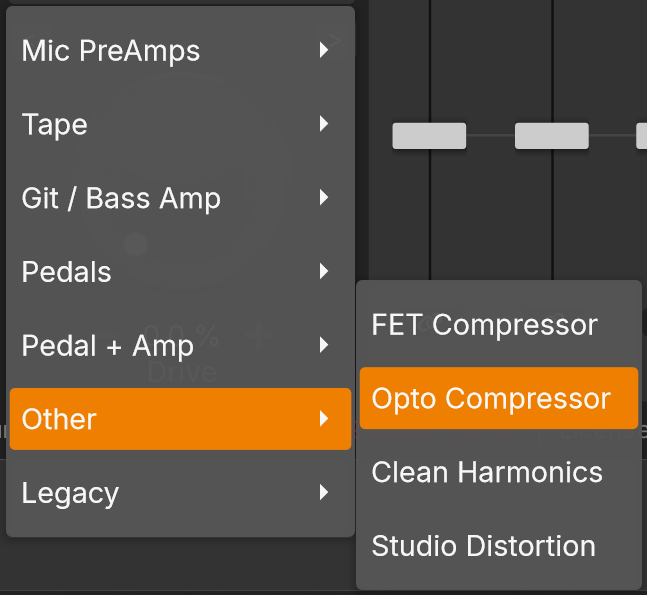
HOFA is leaning heavily into neural modelling here, and in this case it feels justified. Rather than modelling a single piece of gear, Colour Saturator captures behaviours from a range of analogue sources. Preamps, tape machines, guitar and bass amps, pedals, and hybrid chains are all represented as selectable saturation algorithms.
Each algorithm responds differently to level, tone, and dynamics. You are not just changing the colour, you are changing how the saturation behaves. Tape modes soften transients and bloom in the low mids. Amp and pedal models bite harder and feel more reactive. Preamp styles add density without obvious distortion.
The key point is that these modes feel musical even when pushed. Harmonics stack in a way that sounds intentional rather than brittle or fizzy, which is where a lot of digital saturation falls apart.
Input shaping and character control
Before you even touch the drive control, Colour Saturator gives you a surprisingly powerful input section.
The dynamics control lets you either tighten or exaggerate the signal before it hits the saturation stage. On drum buses this is especially effective. You can rein in peaks so the saturation reacts more evenly, or push dynamics harder for more aggressive movement. Bass benefits too, especially when you want consistent harmonic weight without losing articulation.
Tone is implemented as a tilt EQ before saturation. This is a small detail but an important one. By darkening or brightening the signal before distortion, you fundamentally change which harmonics are generated. It makes the saturation feel tuned rather than generic.
There are also optional lo fi tools like wow and flutter, along with several noise types. These are not just cosmetic extras. The noise can be filtered, ducked, or made to follow the signal, which makes it genuinely usable for texture rather than novelty. Subtle tape instability on pads or keys adds movement without sounding gimmicky.
Drive and saturation algorithms
The drive control is simple, but it is backed by a wide range of saturation engines. You can move from barely audible harmonic enhancement to heavy distortion without the plugin falling apart.
What stands out is how forgiving the drive feels. There is a broad sweet spot where things sound bigger, thicker, or more exciting without instantly becoming harsh. When you do want chaos, it is there, but it feels deliberate rather than accidental.
The amp and pedal based algorithms are particularly effective on guitars and bass, but they are not limited to them. Synths, drums, and even vocals can benefit from these modes when used with restraint.
Bias EQ is a real headline
This is one of the features that really sets Colour Saturator apart.
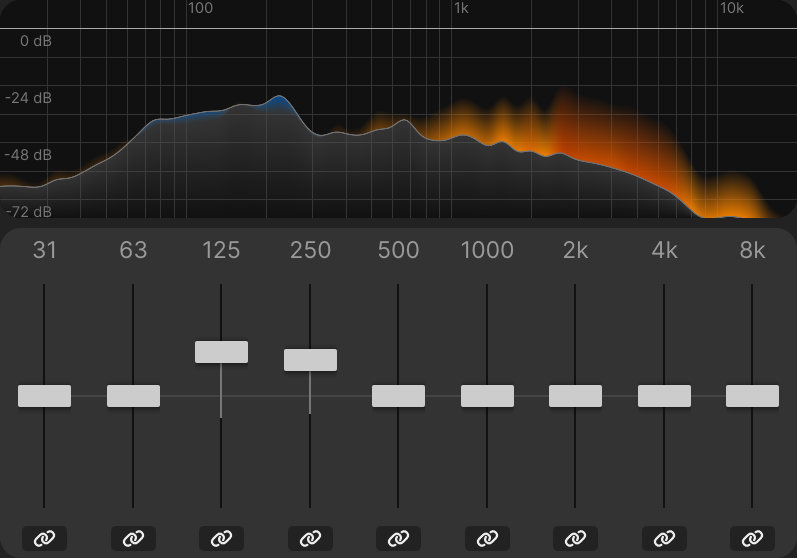
Bias EQ allows you to decide which frequency ranges are more or less affected by saturation. Instead of saturating the entire signal equally, you can push distortion into specific areas while leaving others clean.
On acoustic guitars, this is a life-saver. You can use the Bias EQ to add harmonic body and “woodiness” to the low-mids while keeping the high-end strumming from becoming brittle or harsh. On the mix bus, it acts as a precision exciter. You can target only the frequencies above 8kHz to add expensive-sounding air and sparkle without introducing the phase shift of a traditional shelf EQ.
For those who want more control, Bias EQ can switch into a fully parametric expert mode. This opens up more extreme and creative possibilities. You can emphasise specific harmonic zones, deliberately exclude problem frequencies, or build exciter style effects by forcing saturation to occur only in the top end.
It’s the kind of control that turns a “vibe” plugin into a precision mixing tool.
Output shaping and parallel workflows
After saturation, you get high and low cut filters, an output level control, and a dry wet mix knob. Nothing fancy, but everything you need.
Parallel saturation is effortless. You can blend in just enough colour to enhance a signal without overwhelming it. This works especially well on vocals and buses, where subtlety is often more effective than obvious distortion.
Colour Saturator shines in situations where you want control rather than brute force.
Vocals benefit from targeted saturation that adds density and presence without harshness. Drums gain weight and aggression without losing clarity. Guitars can range from lightly driven to full amp style saturation. Electronic sounds can be pushed into lo fi or experimental territory with ease.
Perhaps most importantly, it encourages experimentation. Because you can decide where saturation happens, you are more likely to try bold ideas without wrecking the balance of your mix.
HOFA Colour Saturator does not try to be a one knob magic box. It is a thoughtfully designed saturation tool that rewards intentional use. The neural modelling gives it a convincing analogue feel, but it is the Bias EQ that makes it genuinely stand out in a crowded field.
Check it out here.