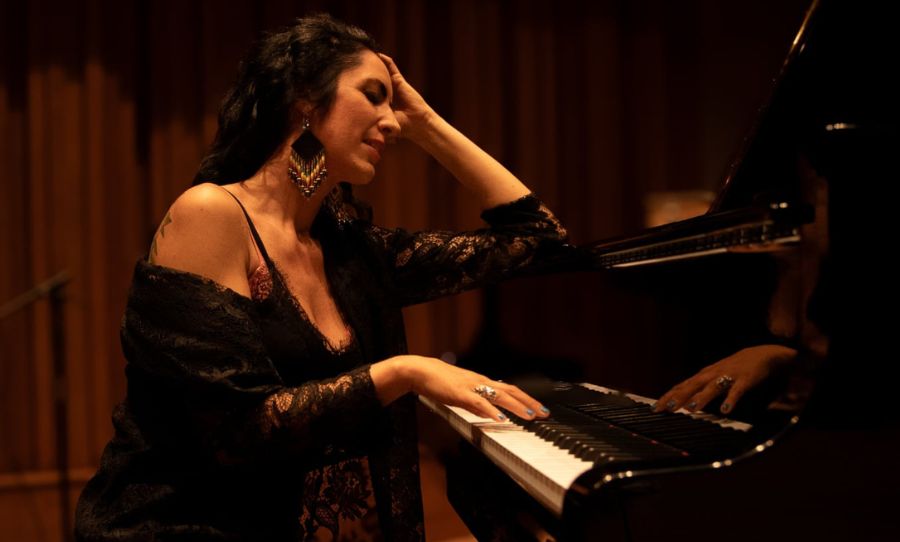
Oslo composer Runa Viggen leans into structure, improvisation and instinct on her most intentional record yet
There’s something quietly ambitious about what Runa Viggen is doing right now — not in a loud, look-at-me way, but in how deliberately she’s reshaping her own sound.
Across Open Plains, the Oslo-based composer leans into something more intentional than her previous work, building the record around a clear conceptual thread rather than a loose collection of ideas.
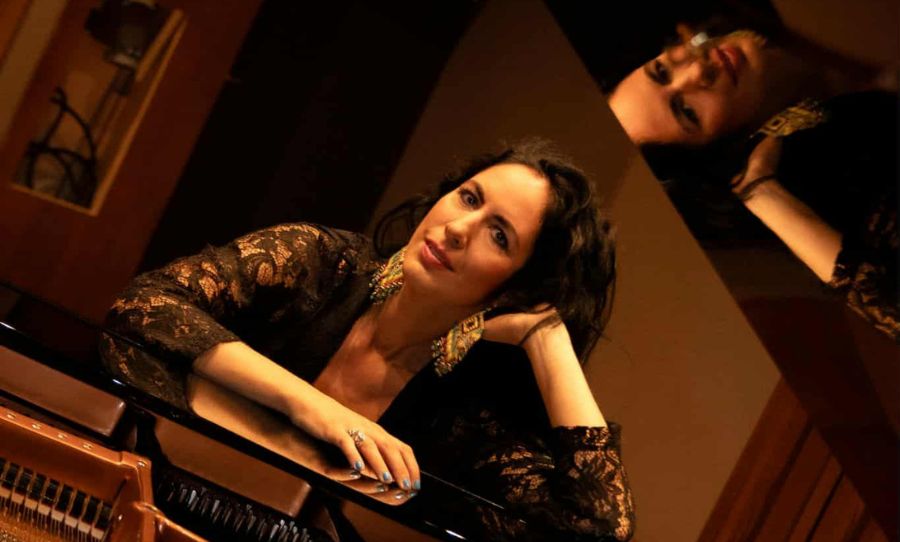
It’s still rooted in the technical precision you’d expect – odd time signatures, structured compositions – but there’s a new sense of openness running through it too, with improvisation and instinct playing a bigger role.
Between church organ shifts, international gigs, and time spent moving between cities, Viggen’s world feels fluid – and that movement is baked into the music.
This is an artist figuring out exactly what she wants to say, and trusting herself enough to follow it through.
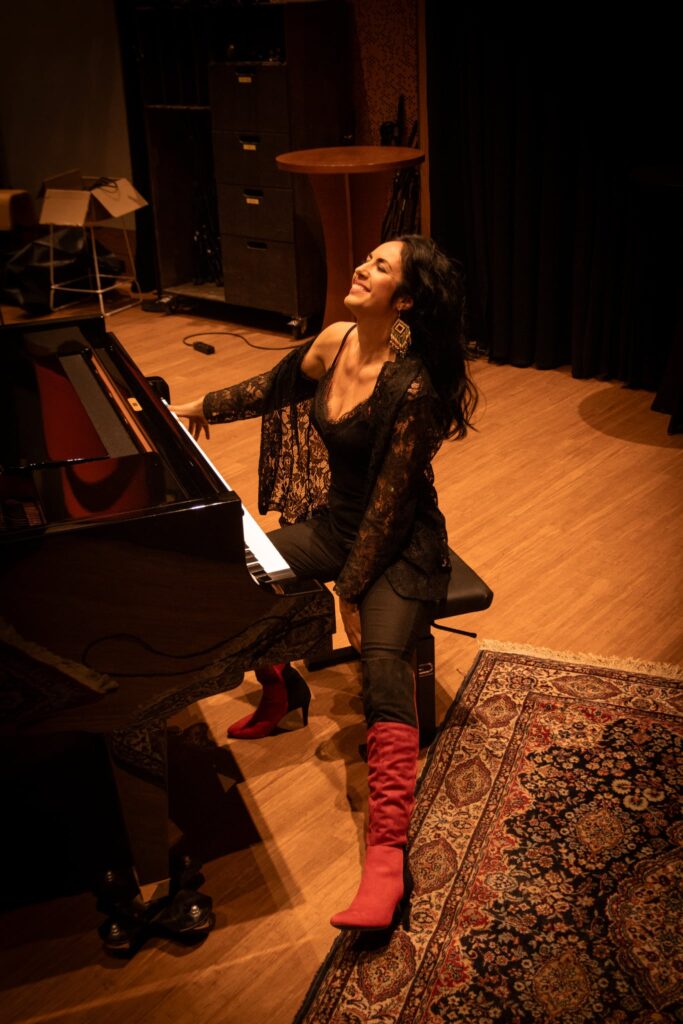
HAPPY: What are you up to today?
RUNA VIGGEN:Today I actually have the day off! Easter has been busy for me, as it usually is, since I play the church organ and have lots of work during the holidays. So today I might go downtown for lunch, or just relax at home.
HAPPY:Tell us a little bit about where you live, what do you love about it?
RUNA VIGGEN:I live in Oslo, Norway, where I’ve been for a few years now. Before that I lived in Berlin for a while, and ‘ve been spending half my time in the US the past couple of years.
I just moved into a new apartment here in Oslo, and I absolutely love it. It`s only 25 minutes with a bus to get to the city center, still it’s in a nice and calm area close to a lake.
I always say that I could live anywhere as long as I can work as a musician. I`ve got a lot of gigs in the Oslo – area at the moment, I love that.
HAPPY: How did you approach making this album differently from your last record?
RUNA VIGGEN:My approach to making this album was very different from my last record. I love ambár my last record from 2022, it has opened a lot of doors for me and established what I wanted to do and how I wanted to sound like.
However, that album was a collection of compositions, a bit randomly chosen, and Open Plains is composed from a conceptual idea of a healing journey.
I knew exactly what I wanted to say and how I wanted to develop my own unique musical expression. I started with the titles of each composition in the right order – the same order they are presented on the album – and decided the key and time signature.
Each song represents a different step on a journey for me.
HAPPY: What was the starting point for Open Plains — a sound, a feeling, or a specific idea?
RUNA VIGGEN: The starting point was this specific idea of composing an album that represents a healing journey, a walk through trauma and old patterns and towards freedom and strength.
I wanted to compose an album without considering the rules of different genres and just mix all the subgenres I love; classical, jazz and rock.
HAPPY: Can you walk me through your typical writing process for a piece like this?
RUNA VIGGEN: Yes, take ‘Amaranth’, the opening track, as an example.
I decided the key and time signature first; I knew I wanted it to be in 13/8, because I love how you can play with beat changes in odd time signatures, and I like the sound of C sharp minor.
In classical music C sharp minor is often used to evoke a sense of mystery and is associated with intense, profound and elegant emotions.
The framework of my compositions are structured and strict; but within those frames I have a lot of freedom. So I started with the piano intro on this specific song, Amaranth, and wrote down the main theme. From there I usually go with the flow and see where it takes me.
HAPPY: Where do you usually begin when building a composition — piano, structure, or something more instinctive?
RUNA VIGGEN: I usually begin with piano, after the main structure (key signature, time signature) is decided.
I have lots of time signature changes in my compositions, so the structure is just the suggestion to start from. I always hear the melody on the piano; naturally, since I`m a pianist, and also because I don’t write down anything for drums or bass.
I don`t want to decide exactly what the bass player or the drummer should play, that’s what we’ll figure out together in rehearsal and I also want to give my musicians a great deal of freedom to shape the music.
HAPPY: How much of your music is planned out in advance versus shaped in the moment?
RUNA VIGGEN: The main structure is planned and lots of the parts of the songs are written down and strictly arranged.
But it`s still not arranged for trio format, so it`s interesting to see what shape and form it takes in rehearsal.
I also keep parts of the charts completely open for improvisation, so I would say that my music is both very arranged and very open at the same time.
There`s parts in every composition that we kept open for whatever might happen and we`re making a lot of decisions live in the moment.
HAPPY: What role does improvisation play in your work, if any?
RUNA VIGGEN:I`m doing a lot of improvisation in my daily work, especially on the church organ.
On Open Plains parts of the album are improvised and there`s lots of freedom to improvise within the arranged structure.
I like that combination. There`s one piece on this album that is entirely improvised; ‘The Tears of My Mother,’ is an improvised piano solo, a piece of music created in the moment.
I love the freedom of creating music like that. On my last album I had a nearly 16 minutes long solo piano improvisation based on an Arabic scale. So I do a lot of improvisational work as well.
HAPPY: Were there any particular influences or listening habits that shaped this record?
RUNA VIGGEN: It`s more a blend of different influences and listening habits that shaped the record.
I`ve been composing music for theater over the past years and I also play church organ on a weekly basis, so you can hear some influences from the theater dramaturgy and classical church music as well.
I actually don`t listen to a lot of music while composing my own. But overall I`m influenced by Keith Jarrett, my all time favorite pianist.
I love classical composers such as Bach and Chopin, and latin jazz pianists such as Chucho Valdez and Michel Camilo. And I`ve been listening to a lot of prog rock and fusion. So in general all those listening habits are sharpening my music.
HAPPY: What did you learn about your own process while making this album?
RUNA VIGGEN: I learned to trust myself a lot more in the composition process.
Creating this album has been an amazing experience for me personally.
I realized that if I only know what I want to say and trust my musical instincts I get the result I’m aiming for.
I also learned a lot from self-producing the whole thing and moving the project to Los Angeles, working with new musicians.
I needed to be very clear about what I wanted and be true to my own unique musical expression, but at the same time be open to how the bass player and drummer would shape the music.
I needed to be more of a leader than I thought I could. It was a great experience and made me a lot more confident as a musician.
I’m proud of this album and proud of creating my own distinct sound.
HAPPY: How do you know when a piece is finished?
RUNA VIGGEN: There’s a lot of listening and playing through before I know when a piece is finished.
I compose music as a story without words. When I can follow the story from start to end and all the different elements and interconnected themes feel right, then the piece is finished.
Every note and part is deeply intentional and necessary.
HAPPY: Lastly, what makes you happy?
RUNA VIGGEN: Music makes me happy! I’m so lucky to be able to do what I love every day, and actually make a living from it.
I get to travel and play music and meet amazing musicians in different places and countries.
That’s a privilege. Being in the sun makes me happy. Ironically I live in Norway, one of the coldest places on earth, but right now the sun is coming out and it’s springtime, I love that.
I do interval running a few times a week, that makes me happy too, endorphins work on me.
I love to cook, and making a good meal makes me happy, especially if I can serve it to my boyfriend. He makes me insanely happy.