A solid soundtrack can make or break a TV show. Get it right, and those scenes stick with you long after the credits roll
The Last of Us has always understood the assignment. From the first notes of Season 1, the music has been doing a lot of heavy lifting – setting the mood, adding emotional weight, and letting you know when shit’s about to hit the fan.
Now, after two long years of waiting (and plenty of Reddit theories), The Last of Us is finally back. Season 2 kicked off on Sunday, April 13 with the first episode, Future Days, now streaming on Max (and airing at 2 a.m. BST on Sky Atlantic and Now for UK viewers). It drops us back into Jackson with Joel and Ellie, where things seem chill – but obviously, that doesn’t last.
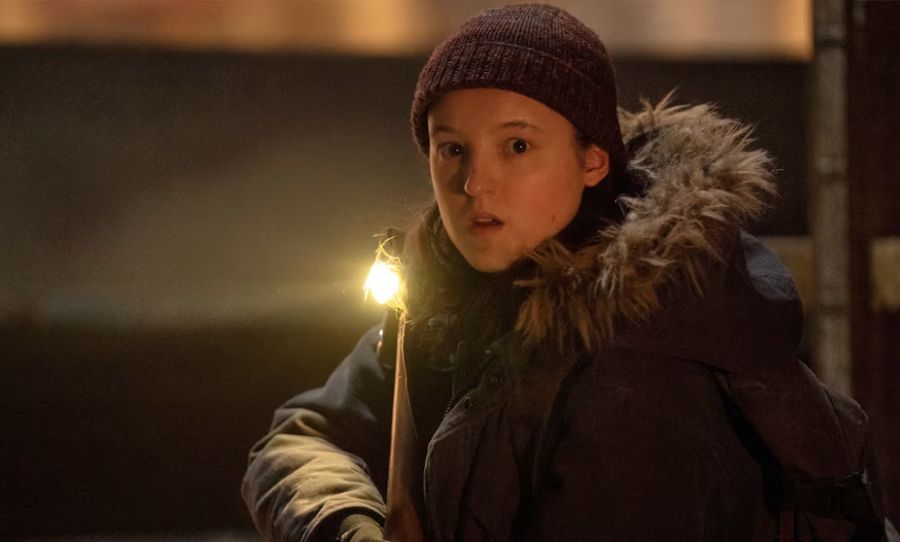
We’re thrown straight into the emotional fallout of Season 1’s ending, while also meeting some new faces – including a big one from the game, Abby, played by Booksmart’s Kaitlyn Dever.
But while all that drama’s playing out on screen, the soundtrack’s quietly stealing the show.
Here’s every song featured in Season 2, Episode 1 – and yep, we’ll be updating this every week as more episodes (and more gems) roll in:
Episode 1: Future Days
Future Days – Pearl Jam
A beautiful gut-punch right out of the gate. Joel’s solemn cover of this Lightning Bolt-era Pearl Jam ballad, which held massive emotional weight in The Last of Us Part II game, now lands in live-action form. It’s more than a song — it’s a promise, a memory, and a warning.
Love Buzz – Nirvana
Grunge gets a moment of glory with this fuzzed-out, psych-tinged Nirvana cover (originally by Dutch band Shocking Blue). It adds an edge of disorientation to the episode — a taste of chaos to come.
Little Sadie – Crooked Still
This Appalachian murder ballad in the hands of Crooked Still becomes ethereal and ominous — the perfect sonic palette for a world that still romanticises the old while slowly decaying in the new.
Ecstasy – Crooked Still
Another Crooked Still track, this time slower and more haunting, used to deepen the melancholy undercurrents of the episode. Cello-led and spine-tingling.
Longing – Gustavo Santaolalla
A returning MVP from the video game’s original composer. This piece is all about tension and heartbreak, draped in his signature sparse guitar textures and atmospheric drift.
The episode sets a high bar – emotionally, narratively, and sonically. With weekly drops expected to continue through the season, we’ll be keeping this space updated with every song featured in The Last of Us Season 2 as it airs.
So whether you’re adding to your apocalypse playlist or just trying to find that one tune from the final five minutes that wrecked you emotionally – we’ve got you.
Episode 2: Through the Valley
Through the Valley – Ashley Johnson, Chris Rondinella
The Last of Us S2, Ep 2 ends with a haunting cover of Through the Valley — originally by Shawn James, but this time performed by Ellie’s game voice actor Ashley Johnson. The song has long been tied to Ellie’s arc, from trailers to gameplay moments, and its return now hits hard.
Played over the end credits after Joel’s brutal death, the lyrics mirror Ellie’s spiral into grief and vengeance. Lines like “I know I’ll kill my enemies when they come” and “I can’t walk on the path of the right because I’m wrong” foreshadow her descent. The titular valley — a nod to the valley of the shadow of death — is where Ellie will now live, armed, angry, and alone.
Johnson, who appeared in the show as Ellie’s mum, brings it full circle. And yes — it still wrecks you.
The Last Of Us – Gustavo Santaolalla
Santaolalla’s signature theme returns quietly but powerfully in the episode, anchoring the chaos in something tender — a reminder of the bond that’s just been broken.
Episode 3: The Path
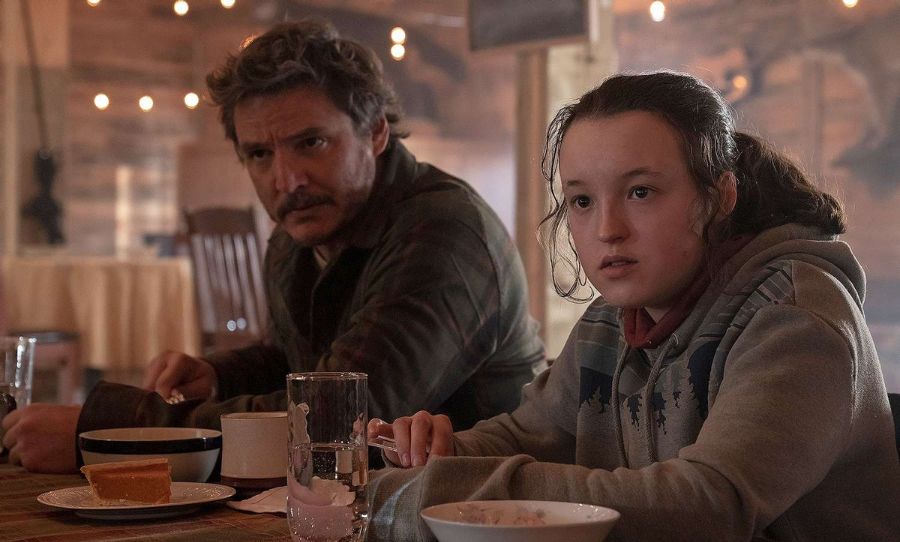
Three months on from the infected ambush in Jackson, the latest episode of The Last of Us cracks open the grief left behind – especially for Ellie (Bella Ramsey), who’s determined to hunt Joel’s killers in Seattle. Backed by Dina (Isabela Merced) and Jesse (Young Mazino), it’s a slow-burning start that introduces us to the scarred and sinister Seraphites. Shot in April 2024, this one’s big on mood: somber, cinematic, and emotionally sharp, though a few critics reckon the dialogue lays it on thick. Still, the chemistry between Ramsey and Merced hits hard—and the tension heading into Seattle is palpable.
The Last Of Us – Gustavo Santaolalla
Gustavo Santaolalla’s moody score is back in full force, tying it all together with that familiar mix of eerie calm and gut-punch emotion.
Episode 4: Seattle Slew
In one of the most touching nods to the game so far, Episode 4 slows things down for a moment that’ll stick with you. While on the road to Seattle, Ellie and Dina take shelter in Valiant Music Shop — an abandoned record store decked out in dusty vinyl, faded Bob Marley sleeves, and Pearl Jam posters.
Upstairs, Ellie finds a Martin guitar — safely stored away in a case, and somehow untouched by time — and what follows is quietly gutting. She sits, breathes, and plays a stripped-back version of A-ha’s Take On Me. Gone is the ‘80s synth sheen; in its place is something raw, fragile, and completely heartbreaking.
Take On Me – Ellie (Bella Ramsey)
This isn’t just fan service — it’s a callback with weight. Joel once promised to teach Ellie guitar, gifting her the one she’s now holding. Her cover is a love letter across loss, memory, and survival. And those lyrics? “Needless to say, I’m odds and ends / But I’ll be stumblin’ away / Slowly learnin’ that life is OK” — they hit like a freight train in the context of everything she’s lost.
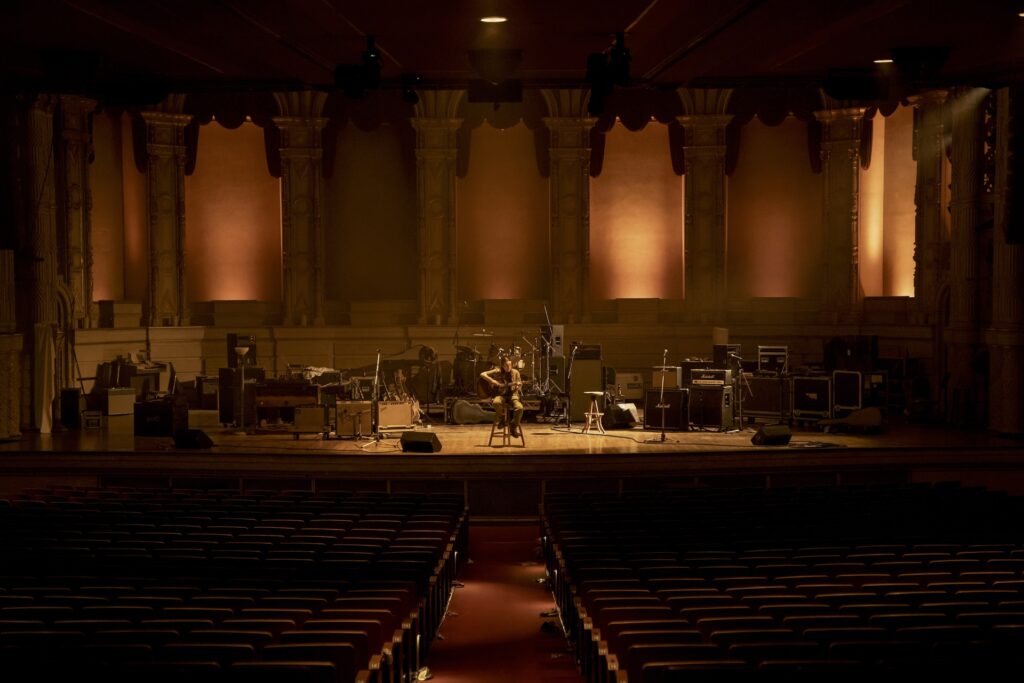
Episode 5: Feel Her Love
Ellie stumbles into an empty theatre, dust motes hanging in the air like ghosts. She finds a guitar, abandoned like everything else, and starts to play Pearl Jam’s Future Days.
She only gets out the line, “If I ever were to lose you…” before falling silent. The next lyric—“I’d surely lose myself”—never comes. She already has.
The song, threaded through The Last of Us Part II and now this episode, hits differently here: raw, hollow, too much. In a world stripped of innocence and soundtracked by violence, music becomes a relic—one that remembers everything, even when its players can’t.
In The Last of Us, even a song can bleed.
Episode 6: The Price
After the nerve-shredding chaos of last week’s episode, The Last of Us hits pause on the apocalypse in a way that feels almost defiant. Instead of charging toward the Season 2 finale, Episode 6 says: sit the hell down. You’re going to feel some feelings, and you’re going to listen to Joel play Pearl Jam, whether you like it or not.
It’s a flashback episode – one that dedicates itself entirely to memory – specifically, to a string of Ellie’s birthdays in Jackson. It’s Joel and Ellie playing house. There’s cake. There are handmade presents. There are painfully ordinary moments. You might almost forget the world outside is in ruins – until you don’t.
The emotional spine of the episode is a guitar, which Joel builds for Ellie with the kind of quiet reverence you usually see in religious rituals or very, very intense woodworking YouTube videos. He engraves a moth on the neck. It’s not just a pretty flourish – in the mythology of The Last of Us, the moth is an obsession symbol. It flutters toward light, even if the light burns. According to co-creator Neil Druckmann, it’s about that fatal magnetism. That draw toward meaning, love, revenge – even when it kills you.
The moth’s image is everywhere in The Last of Us Part II: the title screen, Ellie’s journal, her tattoo. But here, for a beat, it’s not about death – it’s about the guy who survived hell and still managed to craft something beautiful. It’s about a dad who’s trying to give his maybe-daughter one moment of peace.
That moment comes with a song. Joel resists at first – he’s not exactly a Pearl Jam guy by choice – but Ellie’s persistent. And so he plays “Future Days,” the aching 2013 ballad that will forever be known in this universe as the Joel song. It’s sweet. It’s raw. It’s loaded with unspoken trauma.
“If I ever were to lose you, I’d surely lose myself…”
It’s the kind of lyric that hits harder when you know where this story’s going. And if you’ve played the game, you know exactly how devastating that promise turns out to be.
The whole episode is one long inhale before a gut punch. And by grounding it in something as simple — and as heavy — as a song played on a handmade guitar, the show reminds us what it’s really about. Not zombies. Not survival. But what it costs to love someone in a world where everything breaks. Especially guitars.
Future Days by Pearl Jam (2013)
If I ever were to lose you
I’d surely lose myself
Everything I have found dear
I’ve not found by myself
Try and sometimes you’ll succeed
To make this man of me
All my stolen missing parts
I’ve no need for anymore
I believe
And I believe ’cause I can see
Our future days
Days of you and me
Back when I was feeling broken
I focused on a prayer
You came deep as any ocean
Did something out there hear?
All the complexities and games
No one wins, but somehow, they’re still played
All the missing crooked hearts
They may die, but in us they live on
I believe
And I believe ’cause I can see
Our future days
Days of you and me
When hurricanes and cyclones raged
When wind turned dirt to dust
When floods they came or tides they raised
Ever closer became us
All the promises at sundown
I’ve meant them like the rest
All the demons used to come ’round
I’m grateful now they’ve left
So persistent in my ways
Hey angel, I am here to stay
No resistance, no alarms
Please, this is just too good to be gone
I believe
And I believe ’cause I can see
Our future days
Days of you and me
You and me
Days of you and me
Episode 7: Convergence
In the season two finale of The Last of Us, titled Convergence, it’s Soundgarden that gets the last word. Their 1996 slow-burn banger “Burden in My Hand” rolls in with the credits, wrapping up an episode thick with grief, grit and really bad weather. We follow Ellie and Dina through the ghosted streets of Seattle, with Jesse in tow, on a mission to track down Abby and reunite with Tommy. Things unravel, as they tend to do in this show, but it’s that final song—Chris Cornell’s aching howl—that leaves the heaviest mark.