Studio Ghibli icon and queer trailblazer Akihiro Miwa has died.
Millions knew Akihiro Miwa as the voice behind Princess Mononoke’s Moro and Howl’s Moving Castle’s Witch of the Waste.
But those iconic Studio Ghibli roles were just one chapter in a remarkable seven-decade career that made Miwa one of Japan’s most influential cultural figures.

The legendary singer, actor, author, drag icon and queer trailblazer died on June 20 at the age of 91, with his management agency confirming he passed away of natural causes.
To international audiences, Miwa’s voice is hard to separate from Ghibli’s most powerful characters. As Moro, the ancient wolf goddess in Princess Mononoke, Miwa gave the role a rare mix of fury, wisdom and maternal force.
In Howl’s Moving Castle, his performance as the Witch of the Waste turned what could have been a simple villain into something far stranger, sadder and more human.
That voice carried centuries. Which makes sense, really. Miwa had already lived several artistic lives before arriving in Miyazaki’s world.
View this post on Instagram
Born in Nagasaki in 1935, Miwa survived the atomic bombing as a child before moving to Tokyo as a teenager. By 17, he was performing in cabarets, later becoming a major figure in Japan’s chanson scene with his 1957 hit “Meke Meke”.
But Miwa was never just a singer.
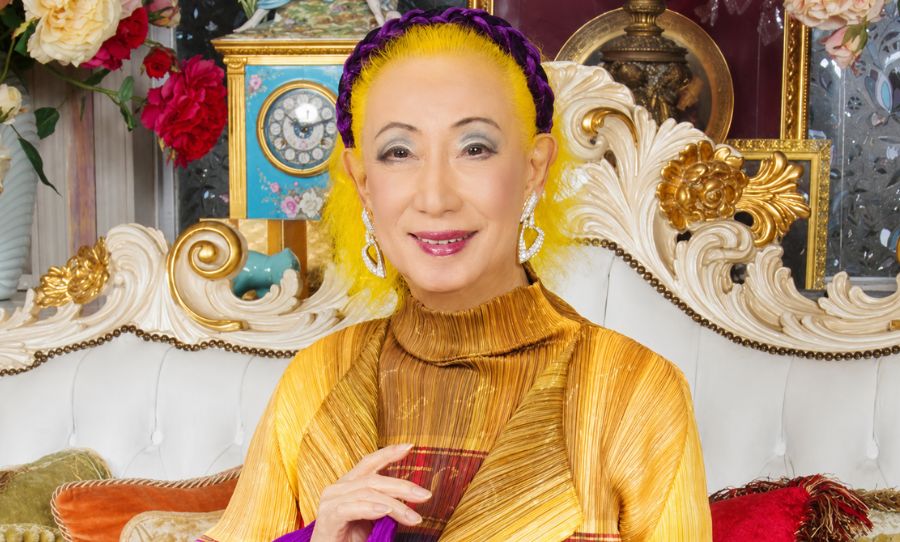
At a time when Japan’s media landscape was far more conservative, Miwa became one of the country’s first openly gay public figures. With his androgynous beauty, flamboyant style and later-signature yellow hair, he challenged what a Japanese entertainer could look like, sound like and say in public.
Decades before the mainstream had much language for gender fluidity, Miwa was already living it out loud.
One of his most enduring works was “Yoitomake no Uta”, a self-penned 1965 ballad about working-class labourers and the sacrifices of mothers. To perform it, Miwa famously stripped away the glamour, appearing in plain dark clothes so nothing distracted from the song’s raw emotional weight.
Miwa’s influence also reached deep into Japanese theatre and cinema. The novelist Yukio Mishima was so fascinated by him that he adapted Edogawa Rampo’s Black Lizard specifically for Miwa, who later starred in the 1968 film version. Mishima also appeared in the film in a brief cameo as an embalmed corpse, which is about as gloriously strange as cinema footnotes get.
Across music, stage, film and television, Miwa built a career that refused to sit neatly in one lane. He was a pop star, a theatre legend, a style icon, a political voice and a performer whose very presence pushed against the limits of post-war Japanese culture.
In accordance with his wishes, a private funeral was held with close family. His altar was decorated with yellow roses, his favourite flower, while letters from fans were placed inside his coffin.
For many viewers outside Japan, Miwa will forever be the voice of a wolf god and a fallen witch. But the fuller story is even richer: an artist who made spectacle feel sacred, queerness feel fearless, and performance feel like a way of changing the world.
Studio Ghibli gave millions a doorway into Akihiro Miwa’s legacy.
Japan already knew the house was enormous.