Artemis II is blasting off – and it’s the first crewed mission beyond Earth orbit since 1972.
You could call in sick. You could pretend you’ve got a “very important appointment.” Or more realistically you could just quietly tab over from your inbox and watch history unfold.
Because sometime between your early coffee and a late lunch scroll, Artemis II is doing something humans haven’t done in over 50 years: leaving Earth’s orbit and heading properly into deep space.
What time to watch Artemis II launch in Australia
For NSW, VIC, QLD, ACT, and TAS, the Artemis II launch is scheduled to take place at 9:24 AM AEST on Thursday morning, April 2, 2026.
If you are in South Australia or the Northern Territory, the launch is exactly at 8:54 AM ACST, while viewers in Western Australia should tune in at 7:24 AM AWST.
Where to watch Artemis II launch in Australia
NASA YouTube / NASA TV – the cleanest feed, full mission control audio if you’re feeling nerdy
ABC News Australia live blogs – for a quick skim between emails
YouTube on your phone – the classic “I’m just checking something” move
If you time it right, you’ll catch ignition, liftoff, and that slow, surreal moment where Earth starts shrinking.
Why this one actually matters
We’ve launched rockets before. Plenty of them. But this is different.
The last time humans went beyond low Earth orbit was 1972, during Apollo 17. Since then, we’ve basically been circling the planet—important work, sure, but close to home.
Artemis II breaks that ceiling.
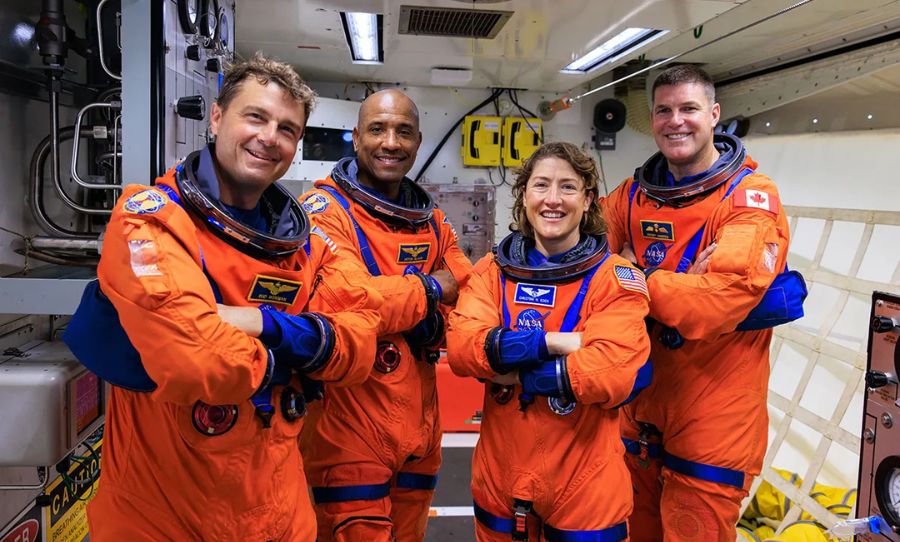
Four astronauts will head over 230,000 miles out, looping around the far side of the Moon – further than any humans have ever travelled. It’s a full systems test with actual lives on board.
And the crew? A far cry from the Apollo era:
Christina Koch – first woman on a lunar mission
Victor Glover – first person of colour to go to the Moon
Jeremy Hansen – first non-American beyond Earth orbit
Reid Wiseman – mission commander
The real stakes (beyond the hype)
This is the moment where theory meets reality.
The Orion spacecraft has to keep four people alive in deep space for 10 days, handle brutal radiation, and then slam back into Earth’s atmosphere at 25,000 mph without turning into a fireball.
If it works? It’s the green light.
Not for nothing but for actual boots on the Moon again, and eventually something more permanent than a flag and footprints.
Worth watching?
Yeas – because it’s rare.
Most space news is incremental. This is one of those hinge moments where, if it goes right, we quietly enter a new era without really noticing until later.
So take the break. Make the coffee. Open a tab.
Worst case: you watched a rocket launch.
Best case: you watched humans leave Earth properly, again.