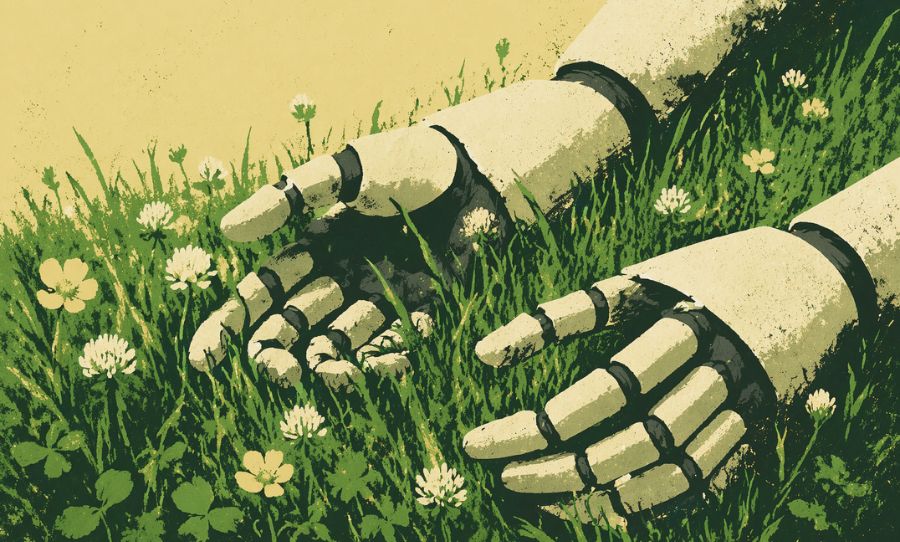
AI isn’t just running on data anymore – it’s running on power, and a lot of it.
In 2026, the biggest constraint on AI isn’t ideas or hardware – it’s electricity. Every prompt, every image, every “quick” question adds up.
And while one interaction might feel small, the scale is massive when billions of people are doing the same thing every day.

The good news: you don’t have to ditch AI to use it more responsibly. You just need to use it smarter.
Here’s a practical, no-BS guide to cutting your AI footprint without compromising on usefulness.
Use smaller models where you can
Not every task needs a heavy model.
Quick edits → small models like Llama 3.2 1B
Summaries → Mistral / 7B range
Complex stuff → GPT-level models
Apps like 1min.AI let you switch model size depending on the task. It’s an easy win.
Don’t default to “Pro”
Tools like Perplexity and ChatGPT-style apps often have a heavier “Pro” or reasoning mode.
Use standard mode for quick answers
Only switch to Pro when you actually need depth
Same idea as streaming — you don’t need 4K for everything.
Run AI locally (if you can)
Local = no data centre energy.
Easy options:
LM Studio → drag-and-drop local AI (Gemma, Llama)
Ollama → runs quietly in the background
Even a basic laptop can run smaller models now.
Ask better questions
Bad prompting wastes energy.
Instead of:
5 follow-ups
Do:
1 clear, structured prompt
Less compute, better answers.
Batch your usage
If you’re working through ideas, don’t drip-feed prompts.
Write one proper brief and get everything in one go.
Use efficient tools
Some platforms are starting to care about this stuff.
Google Gemini (Nano) → runs locally on Pixel devices
Perplexity (standard mode) → lighter than Pro
Emerging tools like SiliconFlow → route queries to greener data centres
Still early, but worth keeping an eye on.
If you go local, use quantised models
Look for:
Q4
IQ4
Q4_K_M
They use less power and feel basically the same.
The takeaway
Most AI energy use now comes from everyday prompts – not the big flashy training runs.
So the impact isn’t abstract – it’s in how we use it.
Smaller models, fewer prompts, more local tools.
Nothing drastic – just less waste.