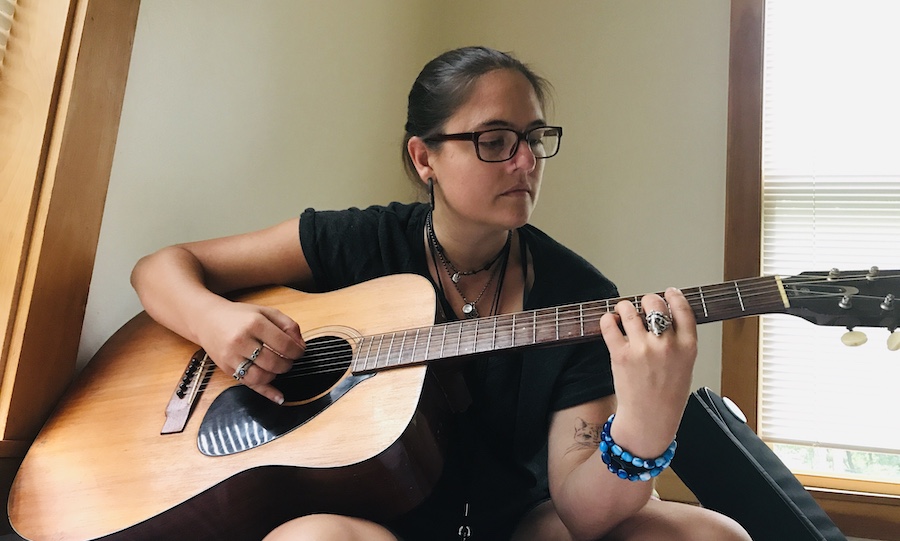
Kristi Knupp offers a track-by-track tour of the intimate stories on Long Overdue.
For years, Kristi Knupp, the brains behind Pretty Little Saturday, captured other artists’ stories as a photographer.
Now, with her debut album Long Overdue, she steps from behind the lens to tell her own.
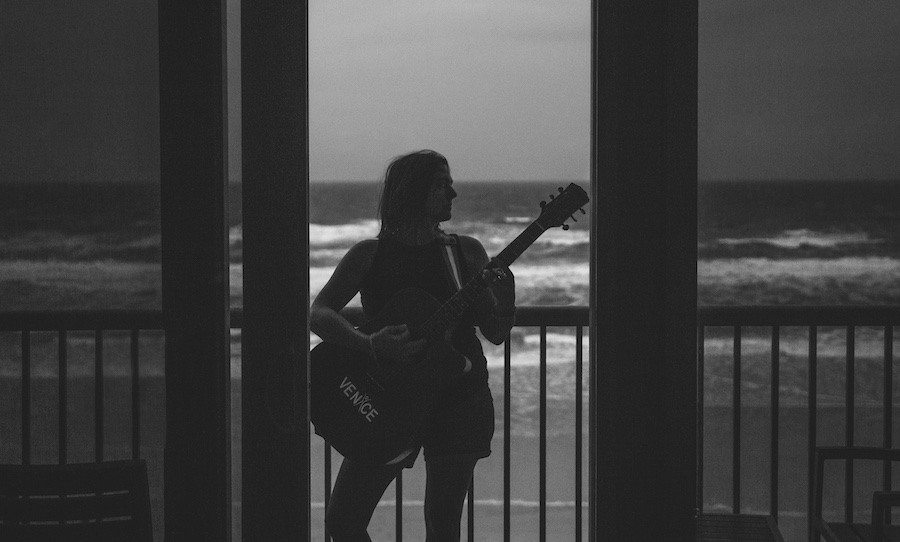
This deeply personal collection of indie pop songs acts as a curated gallery of intimate snapshots, each track a developed film revealing moments of resilience, heartache, and clarity.
Here, Knupp provides an exclusive, track-by-track commentary, pulling back the curtain on the stories and strength woven into her music, from the gossip-defying armour of ‘Bulletproof’ to the unwavering devotion of ‘Too Late For Goodbye.’
This is the artist, finally in focus.
Bulletproof
Bulletproof is about being talked about, judged, and misrepresented by people who don’t really know the truth, especially in a small-town, “Peyton Place” kind of environment where gossip spreads fast and facts get twisted.
It comes from a falling out with an old family friend and the ripple effect that followed, watching people pit stories against each other just to protect themselves.
Instead of fighting every rumor, the song leans into strength and self-respect, choosing to walk away with my head held high. It’s about recognizing lies for what they are, refusing to carry someone else’s blame, and realizing that no amount of talk can actually break you.
At its core, it’s an empowering anthem for anyone who’s ever been the subject of gossip, with the message being simple: say what you want, I’m bulletproof.
Little Bird
On a similar tip to Bulletproof, Little Bird was born out of discord with an extended family member who couldn’t help poking their nose where it wasn’t welcome.
It’s about dealing with someone who talks out of turn, twists the truth, and wears a smug sense of superiority while avoiding any real accountability.
The “little bird” represents the quiet warning, the one who saves the day by tipping the protagonist off to what’s being said behind their back and making it clear they’re not in good company.
Rather than reacting emotionally or getting pulled into the drama, the song takes a sharp, knowing stance, calling out the behavior for what it is and leaving the blame where it belongs.
At its core, it’s about boundaries, awareness, and trusting your instincts when someone shows you exactly who they are.
Long Overdue
Long Overdue tells the story of trying to put down roots, make connections, and feel like you belong, only to realize that no matter how much effort you put in, nothing seems to take.
It captures the quiet frustration of hard days piling up, friendships fading, and that lingering question of whether the problem is you or the place you’re standing in.
There’s a constant push and pull between wanting to leave and hoping it’s all just a phase. As the song unfolds, it settles into acceptance, recognizing that the grass isn’t always greener and that forcing something to grow can do more harm than good.
In the end, it’s about letting go, trusting time, and finding peace in the idea that moments pass, seasons change, and sometimes that shift is long overdue.
Tangerine
Tangerine came together in a really honest, late-night kind of way, sitting in Venice thinking about how brave my best friend’s young daughter was bringing a life into the world and taking on all that responsibility.
From there my mind wandered to all the ways life can hit hard, how everything can feel like it’s falling apart at the seams, and how much it matters to have someone in your corner when things turn sideways.
But just as important is learning how to have your own back when no one else can. That question, “who’s gonna love you,” kept looping in my head, especially when things aren’t pretty or easy.
“When everything turns tangerine” became my way of saying when everything goes to shit, using an old, slightly unexpected phrase to express something simple and human.
At its core, the song is about vulnerability, resilience, and the quiet strength it takes to keep going, trusting that love, whether from others or yourself, still shows up in the hardest moments.
Lonely Ones
Lonely Ones wrote itself in a way that felt almost out of my control, starting with the phrase “we’re the lonely ones” just blurting out and immediately becoming a kind of mantra in my head.
Everything grew from there. I wanted to sit in that repetition, letting it sink in, while the story slowly unraveled the emotional push and pull of loving someone you don’t fully trust, hating what they’ve done, but still loving them anyway.
It lives in that uncomfortable grey area where nothing is clean or black and white, where you can want to walk away and still feel like you can’t breathe without them.
The song wrestles with confusion, longing, resentment, and attachment all at once, capturing how someone can make you feel completely alive while also leaving you painfully alone.
For me, it felt like one of those rare moments where the muse really showed up and dropped something special right in my lap, which is why it holds such a close place on the album.
Push
Push was written a long time ago in Venice, CA sitting at my Wurly keyboard and looking out at the sea, right in the middle of a toxic relationship.
In a lot of ways, it became the thing I needed to hear at that moment, almost like giving myself permission to go, to run, and to be free from something that was slowly pulling me under.
The imagery of the ocean runs through the song, especially the line “I hope the dawn will break in my heart, or I will drown at the bottom of your sea,” which still feels heavy and beautiful to me, capturing that moment where staying feels just as dangerous as leaving.
Written in one long, honest sitting, the song is about reclaiming your light, carving your own path, and choosing freedom over fear. At its core, it’s a quiet but powerful release, letting go of what holds you down and trusting that once you do, there’s no looking back.
Wildflower Eyes
Wildflower Eyes is built around empowerment and that slow, necessary process of stepping out from someone else’s shadow and into your own voice.
It leans into vivid, slightly off-kilter metaphors to tell the story of a doe-eyed, innocent character who starts out just along for the ride, caught behind another person’s doubt and control.
“Wildflower eyes” came to me sitting in a coffee shop surrounded by these huge, beautiful flowers, and it became the perfect image for that openness and vulnerability, seeing the world wide-eyed while still figuring yourself out.
As the song unfolds, that innocence turns into clarity, learning when to let go, shift your point of view, and stop shrinking yourself to make someone else comfortable.
By the end, it’s about trusting your own truth, finding your footing, and realizing that in due time, you really are finding your way.
Afterglow
Afterglow came together in a pretty unexpected way, starting with a walk through downtown Asheville past the Honey shop when the phrase “she’s got the taste of honey in her mouth” just popped into my head.
What started as a cool image quickly turned into a heavier metaphor, with honey becoming a stand-in for addiction and that constant craving for more.
I had someone very close to me battling addiction at the time, and that reality bled into the lyrics, the cycle of chasing an artificial high, selling pieces of yourself, and waiting for that fleeting afterglow that never quite lasts.
Lines like “fix me up a little more” and “headed toward the exit, she’s death bound” paint that dangerous loop, while the chorus captures the euphoric rush everyone’s chasing.
Even though it sits in some dark places, I didn’t want to leave it there. By the end, there’s a reflective moment, cruising past old spots and wondering what life could look like if different choices were made, a quiet reminder that it’s never too late to change direction, even after you’ve done it a dozen times.
Two Wrongs Don’t Make It Wright
This song is a sharp, tongue-in-cheek take on gossip, ego, and the noise that spreads in a small-town echo chamber.
Built around wordplay and attitude, it leans into the absurdity of watching people talk themselves in circles, saying things that sound nice but don’t actually mean much.
Lines like “quit spittin’ rivets around this small town” are my way of calling out loose lips and jealous chatter, telling people to stop running their mouths and stirring up mess.
Rather than getting dragged into it, the song takes a step back, almost treating the drama like a show you can either react to or just observe.
At its core, it’s about recognizing that two wrongs don’t make it right, and sometimes the strongest move is to sit back, see it for what it is, and refuse to play along.
Kind to Be Cruel
Kind to be Cruel tells the story of being wronged by someone over and over again, loving them despite the red flags, and slowly realizing the cost of believing words that never matched the actions.
It looks back on young love and the illusion of something real, only to uncover smoke and mirrors, a house of cards built on half-truths and broken promises.
In the verses and pre-chorus, the main character owns how being too kind, too patient, and too willing to bend ended up causing the most damage, paying the price for someone else’s lack of honesty.
By the time the chorus hits, there’s a clear shift, moving out of heartbreak and into self-respect.
It’s not about revenge, but accountability, hoping they face the consequences of their choices, staying in the bed they made, and finally finding the strength to walk away, even if you wish they’d regret ever pushing you to that point.
The Show
The Show is about dishonesty, control, and finally wising up to someone else’s game. It plays in that tense space where power is being fought over, with the lyrics almost mocking the person who thinks they have more control than they actually do.
Lines like “got you in the spotlight, don’t push your luck tonight, I run the show” are meant to feel a little dangerous and ambiguous, depending on how you hear it, it can be the protagonist stepping up and taking charge, or the enemy trying to keep them small and in line.
That push and pull is really the heart of the song, recognizing the red flags, swallowing the bitter truth, and seeing exactly where things are headed.
We leaned into that unease sonically too, getting a little weird with the synths and vocal processing toward the end, which made it a lot of fun and helped underline that unsettling shift in power.
Too Late For Goodbye
This song is my heart in song form. It came out of a really heavy moment when someone incredibly close to me was going away, and saying goodbye felt completely impossible.
It’s about that kind of love where there’s no turning back, where you’ve been through too much together for saying Goodbye to make sense.
The idea of “it’s too late for goodbye” captures that unflinching devotion, the feeling of being bound to someone until the very end, falling into the earth holding them if that’s what it takes.
The repeated mantra of “I won’t give up” carries the weight of that promise, with the release of “on you” landing as a quiet but powerful vow.
It’s bittersweet, romantic, and deeply honest, the kind of love that stands steady even as the world feels like it might burn down. It still hits me right to the core every time I sing it, and it’s one I’m incredibly proud of, even if we half-jokingly call it my “vampire song.”
I swear if a new Twilight movie comes out, this is the song for it!