What Is the Curse in Something Very Bad Is Going To Happen?
At the centre of Netflix’s 2026 horror series Something Very Bad Is Going To Happen is a generational curse disguised as romance.
What initially presents as a story about marriage and “meant-to-be” love slowly reveals itself as something far more brutal: a supernatural system that turns weddings into fatal trials.
The curse begins centuries earlier, with a woman who refuses to accept the death of her fiancé after a hunting accident.
In her grief, she makes a desperate bargain with Death itself. Death agrees to bring him back, but only under one condition – she must truly believe he is her soulmate.
That single demand becomes the foundation of everything that follows.
From that moment on, her bloodline is bound to a cruel rule: every descendant must marry their true soulmate by sundown on their wedding day, or face death.
Over time, this bargain evolves into something closer to a supernatural law.
If a person in the cursed line marries someone who is not their soulmate, the punishment is immediate and grotesque.
On their wedding night, they die in a violent, full-body collapse, with the series often depicting it through graphic hemorrhaging.
The curse is not simply about infidelity or emotional mismatch – it is absolute. It demands certainty, as if love itself is a fixed truth that must be correctly identified before time runs out.
There is, however, one escape clause, though it is far from merciful. If a bride or groom gets cold feet and calls off the wedding before sundown, they survive.
But survival comes at a cost. They are transformed into an immortal “Witness,” forced to observe every future cursed wedding without ever being able to intervene.
Worse still, the curse does not end with them, it transfers to their partner’s entire bloodline, spreading the horror sideways through generations.
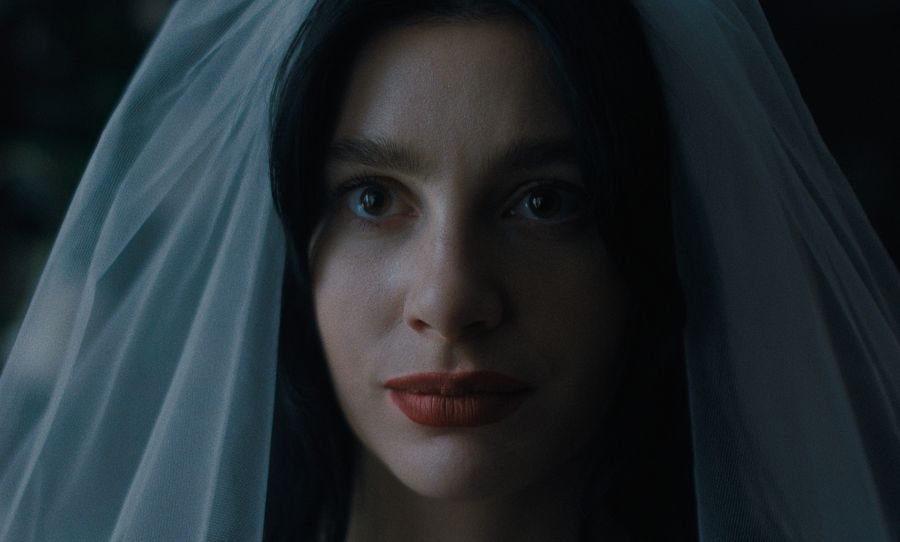
Rachel’s fate becomes the emotional and narrative centre of the finale.
On her wedding day, her groom Nicky panics and refuses to say “I do” before the sun sets, triggering the loophole.
The curse shifts away from Rachel’s family and onto Nicky’s.
In a desperate attempt to undo the damage and protect his own family, Nicky later forces the ceremony to continue by placing the ring on Rachel’s finger.
But because their connection is not genuine, the curse fully activates. Rachel dies violently during the snowbound reception, her death marking one of the series’ most shocking moments.
Yet the loophole still lingers. Because the wedding was technically aborted before sundown, Rachel does not remain dead.
She is revived, transformed into the new Witness. She survives, but only in the most literal sense – stripped of normal life and condemned to immortality, watching the curse unfold over and over again through the generations she has been pulled into.
The aftermath of the curse’s transfer to the Cunningham family is immediate and catastrophic. Victoria Cunningham, Nicky’s mother, dies as the curse exposes the truth that her marriage was never founded on genuine love.
His sister Portia also falls victim, her past Vegas wedding revealed to have never been a true soulmate match.
The wedding itself descends into chaos, with multiple guests dying in a sudden, almost ritualistic collapse that echoes the series’ “Red Wedding”-style escalation.
Even the original Witness, whose role has existed for centuries, finally dies once Rachel takes her place, his purpose fulfilled.
Not everyone is destroyed by the curse, however. Nicky survives, though he is left psychologically shattered and isolated, clinging to a childlike sense of guilt and confusion.
Meanwhile, Jules and Nellie unexpectedly survive as well, their volatile relationship ultimately deemed “true” by the curse itself. In one of the show’s more unsettling twists, the system does not reward happiness or stability – only compatibility, however messy it may appear.
By the end, Rachel is the only figure left who fully understands what the curse has become. She drives away from the cabin alone, no longer a participant in the story but bound to observe it indefinitely.
The series closes on this uneasy image: not of love breaking the curse, nor of the curse being defeated, but of continuity.
Love, in this world, is not salvation. It is a rule system you either survive, misunderstand, or are forced to watch forever.