Nearly 30 years on, Tupac Shakur’s murder case heads to trial.
Few artists have had their music and death mythologised as heavily as Tupac Shakur.
His recording career lasted only a handful of years, but tracks like ‘Dear Mama’, ‘Changes’, ‘Keep Ya Head Up’ and ‘California Love’ still sit at the centre of hip hop culture. Tupac was a rapper, actor, poet and political voice whose influence has continued long after his death.
That is why the trial surrounding his killing feels bigger than a standard courtroom story.
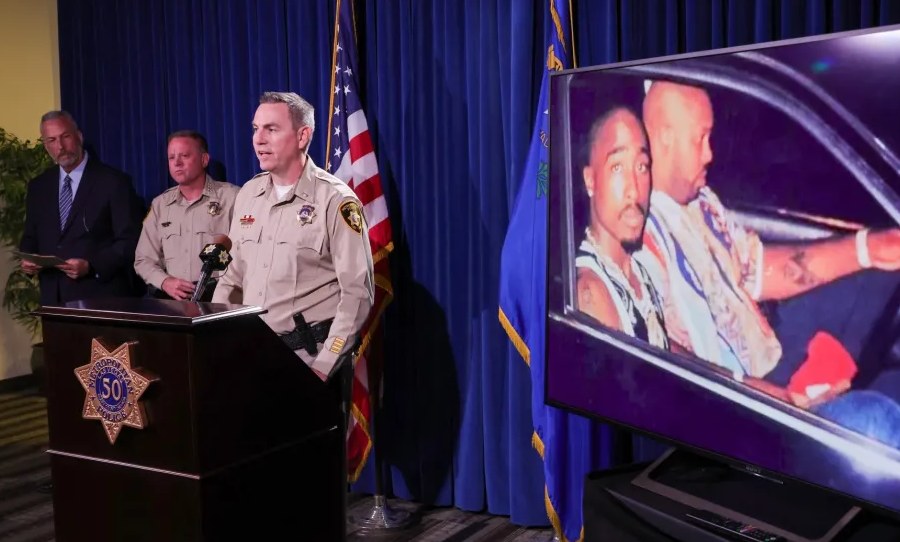
Nearly 30 years after Shakur was fatally shot on the Las Vegas Strip, the only person ever charged over his death is heading to trial.
Duane “Keffe D” Davis has pleaded not guilty to murder with a deadly weapon. Prosecutors do not claim Davis fired the shots. Instead, they allege he organised the attack, obtained the gun and handed it to someone in the back seat of the white Cadillac involved.
The shooting happened on September 7, 1996, after Shakur attended a Mike Tyson fight at the MGM Grand.
Earlier that night, Shakur and his entourage were filmed attacking Davis’ nephew, Orlando Anderson, inside the casino. Hours later, a Cadillac pulled alongside the BMW driven by Death Row Records co-founder Marion “Suge” Knight and opened fire.
Shakur died six days later, aged 25.
The case is expected to focus heavily on Davis’ own words. He has discussed the shooting in interviews and in his 2019 memoir, Compton Street Legend. Prosecutors argue those statements show he played a central role in the attack.
The defence claims Davis exaggerated or invented parts of the story to sell books and build notoriety.
There is no recovered gun or Cadillac, and little physical evidence directly linking Davis to the scene. The jury may ultimately have to decide whether he was describing a genuine murder plot or selling a bigger story for attention.
The trial also returns hip hop to the darkest years of the East Coast–West Coast rivalry, when label politics, gang connections, media hype and personal conflict became dangerously tangled.
The trial is scheduled to begin on Monday, August 10, 2026, and is expected to run for around four weeks, although delays remain possible.
Court TV and Law&Crime are expected to carry live coverage, with major testimony and updates also likely to appear on YouTube.
For Australian viewers, most sessions will fall in the early hours of the following morning, making replays and daily recaps the easier option.
No verdict can undo the mythology that has grown around Tupac’s death. But after almost three decades, the claims surrounding his killing will finally be tested in court.