A Lover Girl’s Revenge.
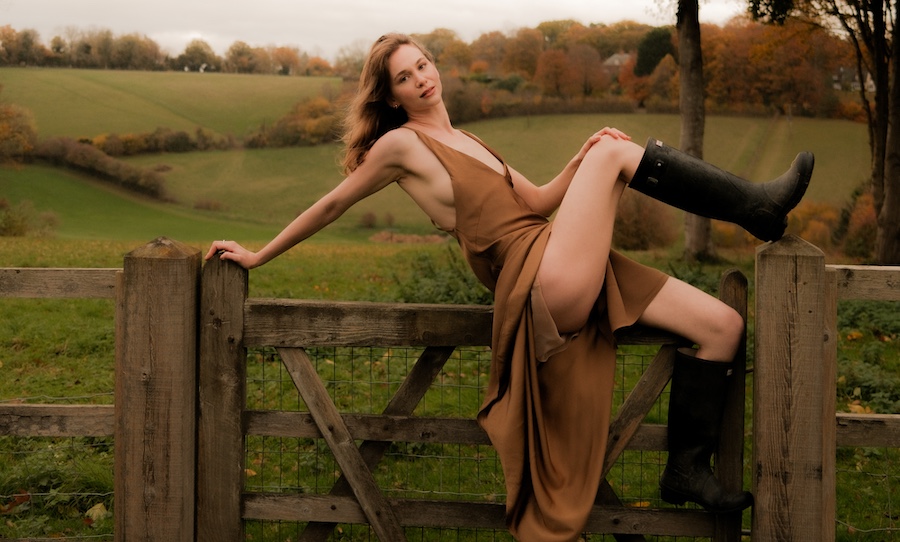
After a six-year silence, UK-based singer-songwriter Isabella Richardson is breaking her own rules.
The Melbourne native, who once graced a Disney+ soundtrack and scored a Top 5 country debut in Australia, walked away from music after losing confidence in her craft.
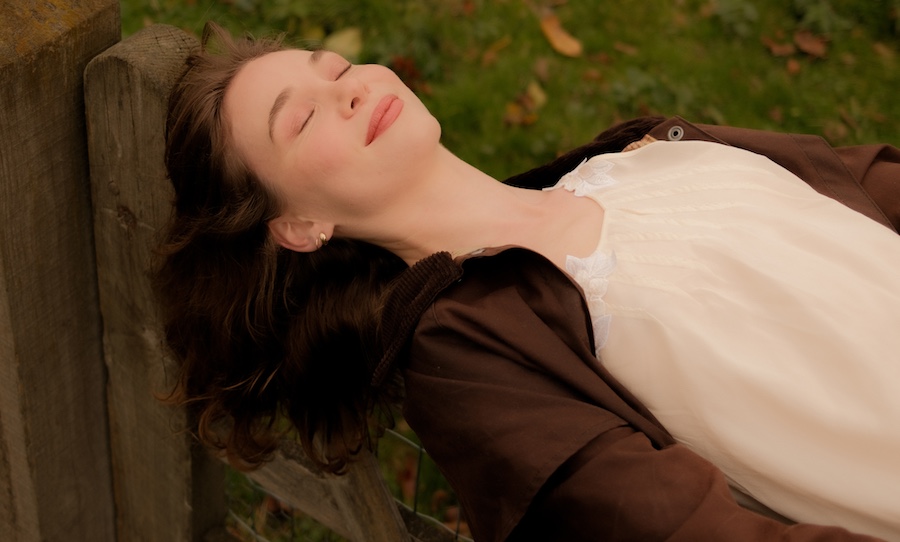
She returns not with a polished comeback, but with a raw, necessary confession: First Aid Kit.
Born from the messy aftermath of a “so-called” relationship, the four-track project, featuring the standout single ‘Waiting Room,’ abandons linear heartbreak for something far more honest.
Richardson describes the writing process as self-administered therapy, a way to patch herself up in real time.
Blending the emotional precision of Lizzy McAlpine with the unfiltered grit of Kathleen Edwards, she transforms private turmoil into universal anthems.
In her own words, she’s learning that closure doesn’t have to come from anyone else. Sometimes, you hold the first aid kit yourself.
HAPPY: What’d you get up to today?
ISABELLE RICHARDSON: I actually had my first day off today in about two weeks (and won’t get another for a while), so I tried to make the most of it.
I spent a good chunk of the day playing guitar and rehearsing for my UK tour that kicks off this Friday in Essex, which I’m really excited about.
I also caught up with my best friend Siobhan over facetime and managed to convince her to come along for the road trip up to York with me on Sunday for one of the shows – so a productive day to say the least.
HAPPY: Tell us a little about where you’re from, and what you love about it!
ISABELLE RICHARDSON: I’m originally from Melbourne, Australia – which I absolutely love for its creativity, music scene and COFFEE, my god I will never not crave Melbourne coffee.
I’m currently based in the UK so it’s something I miss on a daily basis. Alongside my family (of course). I grew up with the privilege of visiting the coast with my family, Flinders and Shoreham were where I felt most at home, it was a blend of all of my favourite things – the countryside, beaches and cows.
HAPPY: Why did you name the EP First Aid Kit, what’s the emotional or literal meaning behind that title?
ISABELLE RICHARDSON: I’ll admit, the title is tied to the namesake of the person I wrote it about…reluctantly giving credit where it’s not entirely due.
Regardless – the title ‘First Aid Kit’ ended up meaning more than just that. The songs were the only way I knew how to cope at the time; they were me trying to patch myself up in real time, make sense of things that didn’t make sense, and hold myself together when I felt completely undone.
It’s messy and it’s not tied up neatly in a bow but that’s kind of the point. It wasn’t about needing him to hear me out, it was about getting through and the only way I knew how was songwriting.
HAPPY: After stepping away for six years, what specifically changed internally that allowed you to finish ‘Runner Up’?
ISABELLE RICHARDSON: I hadn’t written a song in over six years.
A lot of that came down to losing confidence after some pretty shitty experiences in the music industry – trusting people who didn’t have my best interests at heart and letting that knock me more than I realised at the time.
On top of that, I was constantly seeing so many insanely talented songwriters online, and instead of inspiring me, it just made me question whether I was even good enough to be doing it at all.
I think I lost a lot of compassion for myself in that period, I was measuring myself against everyone else and coming up short in my own head, so I just stopped.
What changed was hitting a bit of a tipping point.
I got to a place where I didn’t want to overthink it anymore. When I started writing “Runner Up”, it was a complete word vomit.
It wasn’t about being good or being better than anyone else – it was about walking through the story line by line to make sense of a situation that just didn’t.
I was able to compartmentalise exactly how I felt with every single word, by being honest.
Writing about this relationship (or whatever the hell it was) kind of shut every negative thought off, I wasn’t thinking about the industry, comparisons or whether it was ‘good enough’ – it was self indulgence, a form of therapy.
HAPPY: The EP captures heartbreak as “nonlinear.” Which track on the project was the hardest to revisit emotionally?
ISABELLE RICHARDSON: Great question…but also, ouch. Honestly, every track holds a really specific emotion tied to a moment with him, so none of them were easy to revisit.
But I think “Waiting Room” was the hardest. There’s something about that feeling that’s just…painfully universal.
Knowing how it looks, knowing you deserve better, knowing it’s almost humiliating to be waiting around for someone who probably isn’t even thinking about you – and still not being able to stop.
You sit in that space between holding on and letting go, and it’s like you’re fully aware you’re hurting yourself, but you continue to do it anyway.
The lines about marriage hit me the most when I listen back now – ‘I thought of you as forever, but to you I was borrowed’…and ‘I can lie to myself and get married to someone else and play a convincing mother of two, but will there always be you.’
It’s heartbreaking (especially when I’m someone who doesn’t really believe in the concept of marriage.. it’s quite the statement for me to have made, it’s as if I was convincing him I wasn’t this version of myself he kept painting me out to be).
‘Waiting Room’ is a quiet kind of self-betrayal – where you know you need to move on, but part of you keeps choosing this person anyway. And all it’s really doing is delaying the inevitable.
View this post on Instagram
HAPPY: You worked with producer Harrison Moore in South London. How did he help shape the warm, intimate sound you wanted?
ISABELLE RICHARDSON: I couldn’t have asked for a better person to make this project with.
Harry was incredibly sensitive to how fragile the songs were – both in terms of the subject matter and just me finding my way back into a studio after so many years.
He created a space where I felt safe enough to be vulnerable again which was everything.
We also shared such a similar taste in music, so a lot of our reference points naturally aligned.
That really helped us build this warm, intimate atmosphere around the songs without ever losing the core of what they were.
I’d come in with really simple acoustic guitar backed voice recordings on my iPhone of the songs I wrote and he had this way of turning them into these full, almost anthem-like ballads, but never at the expense of the emotion.
He’s a perfectionist in the best way, and so intentional about every sound. Nothing ever felt overdone– he always made sure the lyrics and the feeling sat at the center of everything.
And very importantly he also made the best coffee which is probably the only reason we survived those sessions that went on until 2am.
HAPPY: You’ve cited Kathleen Edwards and Lizzy McAlpine, very different artists. How do those opposing influences show up on this EP?
ISABELLE RICHARDSON: Yes they are quite different on the surface, but I think what connects them for me is the songwriting.
Kathleen Edwards has been a huge influence on me for a long time. I first discovered her when I was 16 on a trip to Nashville, TN, when I was recording my debut single ‘Pin Up Girls’ with my mentor Michael Flanders.
He introduced me to her, and her lyrics just stuck with me in a way that never really left.
With Lizzy McAlpine, it’s a similar kind of admiration. Her writing is so honest and emotionally precise it almost makes me envious as an artist– in a way that pushes you to be better.
I think what both of them brought into this EP is that sense of directness. There’s not hiding, no overcomplicating things, no trying to follow a formula of what a song should be.
They both write exactly how they feel, without apologising for it, and I think that gave me permission to do the same.
So even though they sound different sonically, the influence shows up in their honesty of the lyrics and willingness to just follow the feeling of a song, rather than trying to fit into any kind of industry ‘rules’.
HAPPY: What’s something you know now about closure that you didn’t know before writing First Aid Kit?
ISABELLE RICHARDSON: I’d never experienced something that confusing before (I know shocker – in my 28 years of life), where you don’t get answers, you don’t get clarity, and you don’t get the other person’s side in any real, meaningful way.
So I had to learn how to sit with that, and figure it out on my own.
What I understand now is that closure doesn’t have to come from someone else. It can come from you, how you process it, how you reframe it, and what you choose to fill that space with afterwards.
For me, it became about recognising that the love I felt wasn’t wasted or misplaced– it was real and it came from me. And if anything, it showed me how deeply I’m capable of loving someone.
I think sometimes you’re drawn to people because you’re trying to meet them in a place they can’t reach, and you end up giving more than you get back.
So closure for me wasn’t about getting answers from him or getting even. It was about turning that love back towards myself and realising my life is still full, still meaningful, and that I didn’t lose something – I just saw it clearly for what it was.
And there’s something quietly satisfying in knowing that kind of love – the way I gave it – isn’t something he’ll just come across again.
HAPPY: What do you hope someone going through their own breakup hears in ‘Waiting Room’?
ISABELLE RICHARDSON: Obviously not everyone’s break up is going to be the same, but I think they’ll relate to that feeling of hopelessness, and that kind of emptiness that comes with a breakup.
I’d hope it just gives them permission to slow down and give themselves grace while they process it. Feel everything – properly.
It’s normal. Even if that means listening to the same song on repeat, or talking it through with your mum or your closest friends a thousand times over– just let yourself grieve it.
And then remember, you still have you, and that’s the most important thing. Nothing will ever replace the love you’re capable of giving yourself, so learn to pour back into that cup.
Healing isn’t linear, and we’re all just figuring out life for the first time. There’s no right way to get through it– just your way, respect that. One thing I had to learn was that I was cherry – picking the good memories and ignoring the bad, just to make it hurt less.
But all that really does is feed a fantasy that isn’t actually real. Real love- the kind you deserve isn’t built on that.
HAPPY: Lastly, what makes you happy?
ISABELLE RICHARDSON: Why is this the hardest question out of all of them?
I think it’s the hardest because it makes me think about the unknown and weirdly enough that makes me ecstatic.
The endless possibilities of my future and what it holds…so many memories I haven’t made yet and so many songs I’m still yet to write that will shape and change me in ways I can’t even fathom right now.
I also have this really simple dream of one day having a cottage in the English countryside with sheep and cows in my backyard. That kind of quiet grounded life really appeals to me and makes me endlessly happy.
But in this specific moment, I feel really grateful for the people around me – my friends, my family, and the time I get to spend with them.
Life genuinely feels so full when you’re surrounded by people who truly care about you, and you care about them just as deeply.
And despite what this EP depicts, I’m a complete lover girl at heart, I love love – in all its forms– and I’m not ashamed of that at all.
Got some tracks you need heard? Send ’em through to us!