
Are the robots taking over, will an AI music generator write the next big hit or are they just making music production easier? Like it or not, AI is here to stay.
The experience of creating music has always been a human one. We think up a melodic fragment, rhythm or harmony, then pick up an instrument and go at it.
Increasingly, however, the advent of artificial intelligence (AI) has muscled in on music production, offering new ways for musicians to create.

It can be a sore point for some, but AI can be a powerful tool that can spur creativity and allow composers and producers to stay in a state of creative flow.
Here are 15 apps and platforms that are signalling the future of music production using AI.
Solaris Virtual Vocalist
The latest in AI music tools, the Solaris Virtual Vocalist is cracking the realistic vocal synthesis process as the first native English library powered by Synthesizer V.
Following a similar format to other vocal synths you may be familiar with, this platform will allow the creator to draft vocals that can later be used as a reference by the real singer, providing unrivalled flexibility and freedom.
The songwriter can purchase vocals in a variety of languages, tones and vocal ranges with its intuitive and easy to use interface making it unique amongst competitors.
Ultimately this AI virtual vocalist gives you access to a singer for any lyrics and melody you can imagine, anytime, anywhere.
And, with its quick processing abilities providing realistic results, this system maintains a high level of user control and input assuring you that the robots aren’t taking over…just yet.
Find out more about its Indiegogo funding campaign here.
Ecrett Music
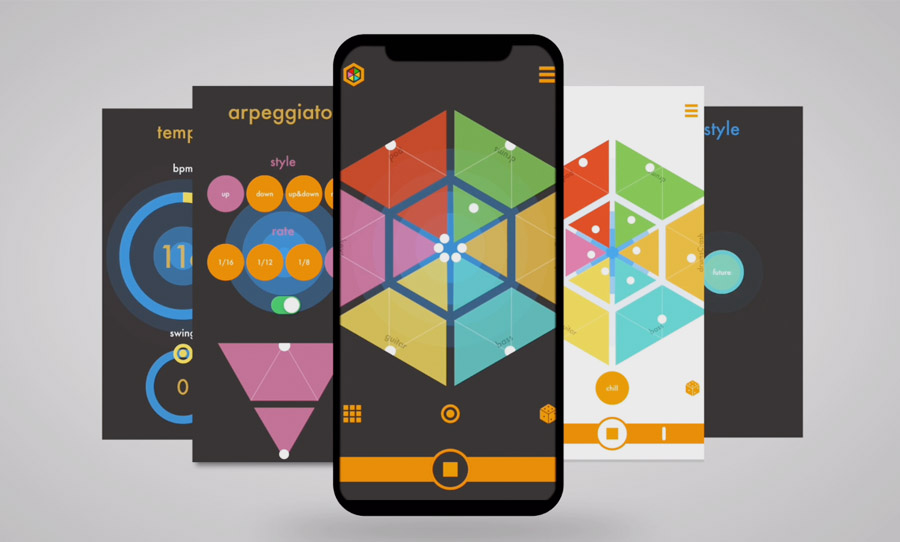
An AI music generator with an intuitive interface, Ecrett Music provides a variety of different scenes, moods and genres you can align your video to.
With the ease of use at the forefront of this royalty-free music generator, Ecrett Music was designed by musicians and composers for musicians and composers, born out of the need to help content creators choose the tunes enhancing their creations.
The process is simple, upload a video, choose the type of scene and mood associated with it and have an individually curated soundtrack adjusted to the vibes you are after.
Examples of which range from calm and chill to suspenseful and powerful. As a side note they have more recently launched the ‘big brother’ to Ecrett and hailed it Soundraw.
Check it out here.
MuseNet
Generated by OpenAI, MuseNet not only focuses on the music but explores the sonic patterns and rhythms embedded within the aural experience.
Utilising deep neural networks, this platform generates four-minute musical compositions with over ten different instruments, combining styles from all ends of the genre spectrum; country, to classical, The Beatles to The Spice Girls.
With this program, it’s not about the human intellect and psyche behind the sounds but rather the aural patterns embedded throughout the harmonies, rhythms and style, predicting the next musical token using a large-scale transformer model.
One major drawcard is its ability to complete the long-lost symphonies created by music greats of the past or if something a bit kookier is up your alley, you can blend together the alternative sounds of Fleetwood Mac with Mariah Carey.
For more info head to OpenAI.
Atlas
It’s long been the bane of a beatmaker’s existence – how to find samples and without clicking on a thousand different folders and subsequently having the will to live drained from you.
Atlas is from New Zealand-based software company Algonaut. The software uses AI to arrange your sample library in continents that are grouped according to style and character.
It even allows you to build drum kits at the click of a mouse. Visit the Algonaut website for details.
Playbeat
Step sequencers can often suffer due to their inherently static nature. Of course, not all are created equal, but even the most sophisticated options can’t respond in real-time to user information.
Enter Playbeat.
Playbeat uses AI to randomise grooves, by manipulating pitch, volume and more. Just load in your own samples (up to four at a time) hit the randomise button and away you go.
Never fear though, you can manually adjust parameters if you feel the need to lock something in.
Check out the Audiomodern website for more info.
A.I. Duet
An article on artificial intelligence wouldn’t be complete without our friends from Google. A.I. Duet works by ingesting millions of melodies, then machine learning deciphers the relationships between these fragments.
Now, because the robot has garnered this musical education, it can respond to stimulus in the way a human might.
For example, a person plays a melodic fragment and the machine plays back its own, not identical, but related phrases. Try it out for yourself.
Musico
Musico is an Italian software company that has developed an AI composer for generative and responsive music-making.
The Musico engine can generate music in a variety of genres and respond to human input in real-time. Capable of composing an endless stream of music, and any music created is also copyright-free, making it available for use by anyone.
The company has developed three apps that enable easier interaction with the engine.
Impro AI controls the engine with intuitive gestures to create an endless variety of performances.
Song allows anyone to intuitively control the engine, adding real-time music effects to your voice.
And MusicFit creates a workout soundtrack by generating music in sync with your body’s movement.
Visit the website for more details.
Aiva
To be successful in the production music game, you have to make a lot of music. I mean, a lot. Aiva is a platform that aims to help you make soundtracks with ease by using AI to generate MIDI files in a style of your choice.
Once you land on a style that is to your liking, you can download the MIDI files so you can expand on them with your own sounds, or simply download the audio.
More than many other AI apps, this one is likely to raise the ire of purists because of the temptation to let the machines do all the work.
It can, however, be a great launchpad for entirely original compositions.
Head over to Aiva for more.
MatchTune
MatchTune (formerly known as Muzeek) is a software that uses artificial intelligence to solve a problem that’s unique to the 21st century: YouTube soundtracks.
MatchTune claims that the vast majority of videos on YouTube are yet to be partnered up with the perfect soundtrack – music that’s perfectly arranged to suit the style, length and dramatic moments within each video. AI can help with that.
Artificial intelligence analyses the points of climax within a video then separates an original composition into its constituent elements, rearranging them into a new piece that syncs up perfectly with the action on screen.
Visit the website to see it in action.
LANDR
The headline on LANDR’s website reads “Create, we’ll do the rest.” Implying that mastering isn’t a creative discipline in its own right is likely to get a few engineers hot under the collar – that aside, LANDR is clearly aiming to implement AI as a final step in the creative process.
Machine Learning means that AI can get smarter with experience and LANDR is the exemplar of this principle.
It has a vast reference library at its disposal in order to help it make appropriate and tasteful decisions when it masters your track.
To find out more, visit their website.
Suno
Suno is a next-level text-to-song generator, capable of creating full vocal tracks from simple prompts.
Musicians and producers can type in a few descriptive lines, choose a style or genre, and the AI generates melodies, harmonies, and lyrics with realistic vocal delivery.
Its real strength is in experimentation—testing ideas, sketching demos, or producing entirely new sounds without needing a studio full of session musicians.
While it’s not a finished-product replacement for professional singers yet, it opens a doorway for artists to explore creativity in ways previously impossible.
Suno is particularly exciting for rapid songwriting and sonic exploration.
Check it out here.
Udio
Udio is an AI platform built for realistic vocals and genre-blending compositions.
It allows musicians to craft songs that mix unexpected styles or create lifelike vocal performances without a human singer.
Whether sketching ideas, experimenting with new sounds, or producing a track for video or media, Udio offers flexibility and speed.
Its AI interprets stylistic prompts, producing melodies, harmonies, and rhythms that feel organic and expressive.
Unlike other tools that feel mechanical, Udio balances human-like nuances with machine efficiency.
For artists looking to explore boundaries, sketch drafts quickly, or experiment with novel musical blends, Udio is an indispensable creative partner.
Head here for more.
Endel
Endel focuses on AI-generated functional music designed for focus, sleep, and wellness.
By combining environmental and physiological data with AI composition, it creates soundscapes that respond to the listener’s surroundings or activity.
Musicians and brands alike are exploring Endel for innovative projects, from immersive installations to productivity-boosting soundtracks.
Its generative approach produces endless variations, making each listening session unique.
Beyond personal use, it offers a new avenue for creators to think about music as experience, not just composition.
Endel bridges the gap between art, science, and functionality, offering a fresh perspective on how AI can enhance mood and cognition through sound.
Head here for more.
iZotope (Ozone, Neutron, Nectar)
iZotope’s suite of AI-powered tools—Ozone for mastering, Neutron for mixing, and Nectar for vocals, has quietly transformed professional studios worldwide.
These plugins analyze audio tracks using machine learning to offer suggestions for EQ, compression, stereo imaging, and balance.
While engineers still make creative choices, AI provides a reference point, speeding up technical decisions and improving consistency.
Nectar specializes in vocal processing, offering pitch correction, harmonization, and effects tailored to the performance.
For modern producers, iZotope tools act like a highly experienced studio assistant, making technically complex decisions more intuitive and freeing up time for creative experimentation without compromising professional quality.
Check it out here.
Melodyne (with ARA + ML features)
Melodyne revolutionized audio editing with its machine-learning pitch and note detection. Unlike traditional tools, it allows producers to manipulate individual notes within polyphonic recordings, adjusting pitch, timing, and dynamics while preserving natural tone.
Its ARA integration with DAWs makes the workflow seamless, merging analysis and editing without bouncing tracks.
While Melodyne isn’t generative in the sense of composing music, it fundamentally changed how musicians approach recording, correction, and arrangement.
For vocalists, instrumentalists, and producers, it’s an indispensable tool for polishing performances, experimenting with harmonies, and creatively reimagining recorded material, proving that AI can augment precision without stripping away human expression.
Check it out here.