How a Perth musician and producer turned isolation into a cathartic, self-made debut.
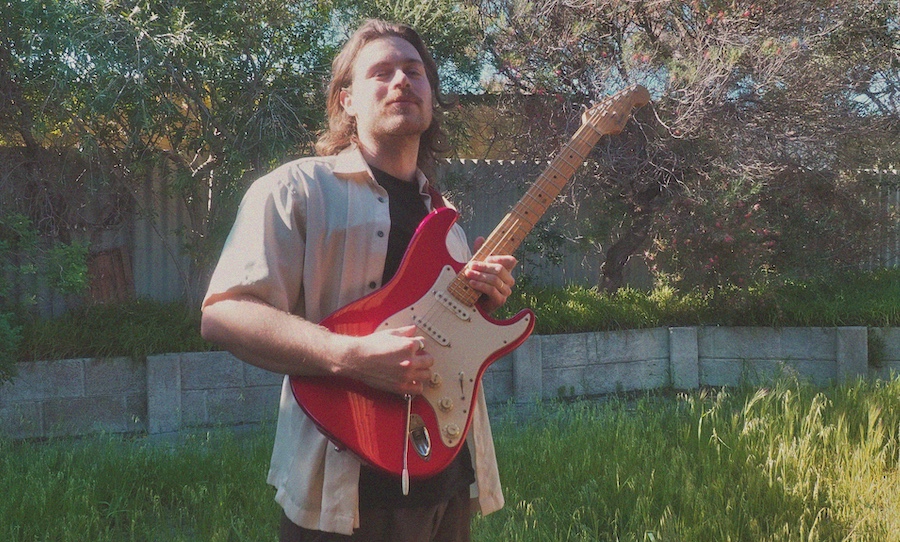
From the northern suburbs of Perth, 25-year-old Josh O’Mara has spent years behind the glass as a sound engineer at Sundown Studios, helping other artists realise their visions.
Now, he’s stepping squarely into the spotlight with his debut solo EP, Home Alone.
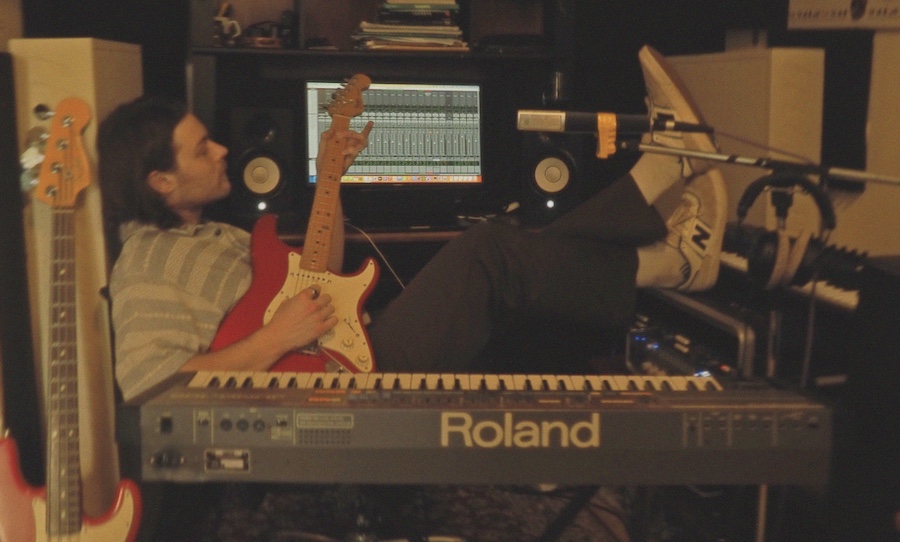
A deeply personal and raw collection, the EP was entirely written, performed, recorded, mixed, and mastered by O’Mara himself in the untreated corner of his living room.
Serving as an audio timestamp for a chapter he’s about to close, the project explores themes of solitude and introspection through a dreamy, soulful lens.
In this interview, O’Mara opens up about the catharsis of complete creative control, the value of artistic limitations, and why this solitary foundation is pushing him toward a collaborative, hi-fi future.
Happy: What’d you get up to today
Josh O’Mara: Well, today I stumbled out of bed after staying up a little too late and got myself to the gym to exercise.
I’ve been enjoying not using my phone at the gym and in the morning. So I can set the tone for the day.
After this I eat, practise some guitar and get stuck into any work that I have to do. Every day is different for me though.
Happy: Tell us a little about where you’re from, and what you love about it!
O’Mara: I’m from Perth, specifically the northern suburbs. It’s chill and near the coast and easy to relax in. It’ll always be home but I think after living here for 25 years I need the hustle bustle of a big city.
Happy: The EP title, ‘Home Alone,’ is very evocative. Beyond the physical space, what does that phrase mean to you in the context of this collection of songs?
O’Mara: For starters it is just me playing all the instruments, mixing everything and even mastering the EP. The only ears that heard these songs before they were released were mine.
I think this reflects in the music as a lot of the songs aren’t conventional. They have a story that unfolds without a verse/chorus structure and are quite personal lyrically.
Another reason is that I tend to go through periods of being a bit of a recluse and not stepping out into the world all that much. This is because I am nestled inside with my instruments making noise, and quite happy doing so.
However, that doesn’t last long as I always miss hanging with people.
Happy: What were the biggest creative challenges or happy accidents that came from working in your small, untreated home studio?
O’Mara: I think working in a professional studio micing up a drum kit with 5 – 12 microphones pointing $30,000 at it and then heading home and using one microphone for everything is a drastic contrast.
At the studio there are endless micing opportunities, the use of outboard gear, hearing everything in a beautifully treated room and I love that. However, I have a comfort at home.
I can slip into my home studio any time, at any hour of the day or night; this is the key. These songs weren’t demo’d and then brought into the studio (which is usually the case) they were made impulsively in the moment on Pro Tools and that is it.
I liked this as a concept for my first real body of work – it’s raw.
Happy: As the sole creator, recording, mixing, and mastering the EP yourself, what was the most rewarding part of having complete control, and was there any moment you wished for a collaborator?
O’Mara: The most rewarding part is being able to express myself completely the way I want to. It is more of a cathartic process and keeps me in a state of flow.
I see it as like painting a picture where I choose all the colours and brushstrokes. However, moving forward I absolutely want to collaborate and have other musicians in the music.
I think after making this and spending lots of time alone creating I truly miss the magic of playing with others. There is nothing quite like it.
View this post on Instagram
Happy: The EP serves as a timestamp for your living space, which you’ll soon be leaving. Is there a specific track that most powerfully captures the essence of that room and this chapter of your life?
O’Mara: Hmmm, I don’t think there is one song that encapsulates the room and the chapter. There are many feelings through the EP, many moments. Sometimes dark and despairing and at other times relieving and hopeful.
Happy: Can you tell us about the title track? As the EP’s final single, how does ‘Home Alone’ set the tone for the rest of the EP?
O’Mara: This song particularly reflects on loneliness. It kind of just came out of me one day really quickly.
Some people might listen to it and it won’t make sense as it isn’t the track you really ‘sing-a-long to.’ There are 3 different sections, a beginning, a middle and an end. I left it intentionally bare because I think the space speaks for itself.
It’s the last song on the EP and it’s a goodbye.
Happy: Now that you’ve built this foundation with your first solo EP, where do you see your sound going next? Are you interested in integrating more large-studio resources, or has this experience cemented the value of a home-grown approach?
O’Mara: I am going for a complete 180 on my approach. I want to invite other players into the mix and focus on writing songs on an instrument first and then bring them into a band setting.
Rather than writing the songs on Pro Tools, where I’d make the beat and then sing into a microphone
I’ve already started writing new songs. I will probably record them with a more HI-Fi sensibility, so yeah integrating more large-studio resources.
Happy: Having worked on both sides of the glass, as both a sound engineer and an artist. What advice would you give to other young producers who are trying to develop their own solo work?
O’Mara: I am not really one to give advice because I am still figuring this all out but I reckon staying true to yourself and finding your own sound is really important.
Focus on your strengths as a musician/artist and don’t be afraid of failure. You can always pick yourself up and continue to progress with your art regardless of whether you receive external validation for it. You have to start somewhere and remember it’ll probably take many years.
Happy: Lastly, what makes you happy?
O’Mara: Being with friends and family makes me very happy. Playing music with people and creating music is one of the funnest things I do in my life.
Relaxing after a big day makes me very happy too. And finally working with artists on their music. Be it recording/mixing for them or helping them produce it is probably one of the best and rewarding things I do.
I love sharing the passion of this artform with other like-minded creatives.