Australia has a long history of looking at impossible problems and deciding to have a crack anyway.
From the invention of the black box flight recorder to the technology that helped shape modern Wi-Fi, some of our best ideas have come from curiosity, persistence and a refusal to take “that’s impossible” as an answer.
Now, a Sydney AI consultant has added a very 2026 twist to that tradition, using ChatGPT and other AI tools to help create a personalised cancer vaccine for his rescue dog, Rosie.
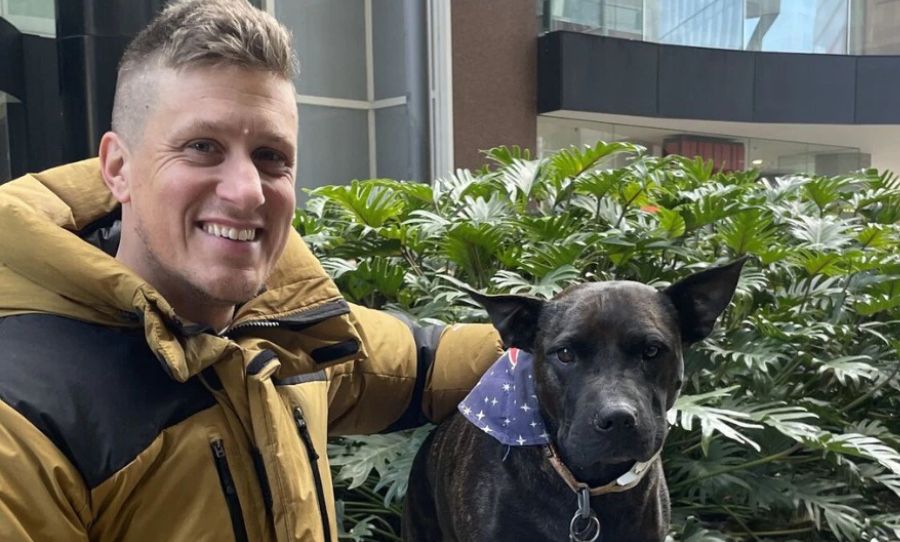
When eight-year-old Staffordshire bull terrier cross Rosie was diagnosed with aggressive mast cell tumours, her prognosis was grim. Conventional treatments had stopped working, and vets estimated she had only months left to live.
Rather than accepting defeat, Rosie’s owner, AI consultant Paul Conyngham, approached the problem the way he knew best: as a giant data challenge.
The process began with a $3,000 genetic sequencing test that mapped the DNA of Rosie’s cancer. The result was a mountain of genomic data that would be difficult for most people to interpret, let alone turn into a potential treatment plan.
Conyngham used AI tools including ChatGPT to better understand how personalised cancer vaccines are designed.
By analysing the tumour’s genetic mutations, he worked to identify neoantigens, unique markers found only on cancer cells that can help the immune system distinguish healthy tissue from disease.
He also turned to AlphaFold, Google’s AI-powered protein modelling system, to predict how those mutations might appear in Rosie’s body and which targets could be most effective for a vaccine.
Importantly, the project didn’t end with AI.
Armed with his research, Conyngham approached scientists at the University of New South Wales, who reviewed and validated the findings. The team then designed and manufactured a bespoke mRNA vaccine based on the identified targets.
Rosie received the personalised vaccine alongside conventional immunotherapy treatment.
The results have been remarkable.
According to reports, Rosie’s largest tumour shrank by around 75 per cent. Her overall tumour burden dropped significantly, and she regained much of the energy and mobility she had lost during her illness.
The story quickly spread online, eventually catching the attention of OpenAI CEO Sam Altman, who described it as an “amazing story.”
While researchers are careful to stress that this is a single case rather than a clinical trial, the implications are difficult to ignore.
Rosie’s recovery isn’t proof that AI has cured cancer, nor is it evidence that chatbots can replace doctors or scientists. What it does demonstrate is how AI can help bridge the gap between highly specialised research and motivated individuals willing to learn.
For decades, personalised treatments like this have largely been confined to major research institutions and pharmaceutical companies. Rosie’s case suggests that AI may help make those pathways more accessible, helping patients, researchers and clinicians collaborate in ways that weren’t possible just a few years ago.
Whether it becomes a landmark moment for personalised medicine remains to be seen. But for one Sydney family, one rescue dog and a growing community of researchers watching closely, it’s already a breakthrough worth celebrating.
So what did he actually ask ChatGPT?
Conyngham has described using AI less like a magic cure machine and more like a research assistant. The prompts were designed to help him understand the science, process the data and stress-test his own thinking before taking the findings to experts.
First, he used AI to map out the workflow behind personalised cancer vaccines.
Prompt:
“I have raw genomic sequencing data (FASTQ files) from a canine tumor. I want to identify tumor-specific neoantigens to design a personalized mRNA vaccine. Act as a senior bioinformatician. Walk me through the exact step-by-step pipeline required to process this data, filter out normal DNA, and isolate the mutations. Explain the standard software tools used for each step.”
Once he understood the process, he used AI to help write code that could analyse and filter the genomic information.
Prompt:
“I need to cross-reference my list of mutated peptide sequences against the standard canine reference genome to ensure they are truly unique to the tumor. Write a Python script using the Biopython library that takes a CSV of my mutated sequences, runs a BLAST search, and filters out any sequences that have a 100% match with healthy canine tissue.”
Before approaching researchers, he also used AI to challenge his own conclusions and look for weaknesses in the proposed vaccine targets.
Prompt:
“Here is the methodology I have used to select 10 target neoantigens for a canine vaccine: [Insert your steps/data here]. Act as a skeptical immunologist. What are the potential flaws in this selection? Are there reasons why these specific proteins might fail to trigger an immune response or cause an autoimmune reaction?”
According to Conyngham, the point was not to have AI generate a cure. It was to understand a specialised field, analyse large datasets and build a research-backed case that could then be reviewed by qualified experts.
The vaccine itself was ultimately validated, designed and manufactured by scientists, with AI helping bridge the gap between raw genomic data and real-world medical research.