The singer says critics missed the grunge inspiration behind the look and exposed a troubling double standard in the process.
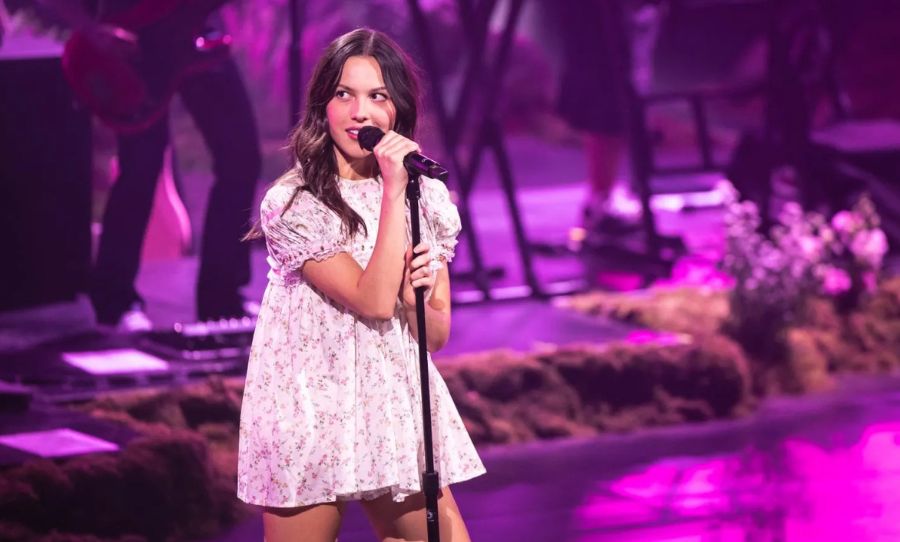
The internet had a lot to say about a floral babydoll dress Olivia Rodrigo wore on stage and in her Drop Dead video. Rodrigo, however, thinks the reaction says more about culture than it does about her wardrobe.
Speaking on the podcast Popcast, the 23-year-old singer addressed criticism that accused her of “infantilising” herself through the look, with some online commentators going as far as labelling it “pedocore” or comparing it to a “Lolita” aesthetic.
Rodrigo said she was frustrated by what she sees as a glaring double standard in how women’s bodies are discussed online.
“I’ve been on stage in a sparkly bra and tiny shorts,” she explained, noting that those outfits attracted far less scrutiny than a loose-fitting dress that covered her body. For Rodrigo, the backlash revealed something more troubling about the way people interpret women’s clothing.
She argued that immediately viewing a babydoll dress through a sexualised or predatory lens reflects broader cultural issues, rather than anything inherently problematic about the outfit itself.
Rodrigo also linked the criticism to the kind of messaging many girls grow up hearing — that they are responsible for how others perceive or sexualise them.
What made the controversy particularly surprising for Rodrigo was that she wasn’t trying to project a traditionally “sexy” image at all. Instead, she said she was drawing inspiration from alternative rock icons she has long admired, including Kathleen Hanna and Courtney Love.
That context is a big reason many music journalists and cultural commentators came to her defence.
The babydoll dress has a long history in fashion that stretches far beyond internet discourse. Popularised by figures like Twiggy and Brigitte Bardot during the 1960s, the silhouette was initially embraced as a rejection of more rigid and conservative ideas of femininity.
By the 1990s, artists such as Courtney Love and Kat Bjelland had adopted the look as part of the riot grrrl and grunge movements, often pairing babydoll dresses with combat boots, smeared makeup and deliberately confrontational performances. The contrast became a statement of autonomy rather than innocence.
Love even weighed into Rodrigo’s controversy online, defending the singer and suggesting that people projecting sexual meaning onto the outfit might be missing the point entirely.
The debate has also highlighted a broader shift in internet culture. Many commentators argue younger generations have grown up in a post-#MeToo landscape shaped by conversations around exploitation, online safety and power dynamics.
While that awareness has led to important discussions, critics of the backlash argue it can sometimes tip into over-analysis, where even relatively ordinary fashion choices become loaded with unintended meaning.
For Rodrigo, the issue is ultimately pretty simple. She believes women shouldn’t have to dress around the possibility that someone else might interpret an outfit through a predatory lens.
And judging by the conversation her dress sparked, that’s a debate the internet is nowhere near finished having.