A new term is quietly taking over music fandom spaces in 2026: “blue dot fever.”
And despite sounding like a strange medical condition, it actually refers to something far more stressful for artists, empty seats.
The phrase comes from Ticketmaster’s seating maps, where unsold tickets appear as blue dots.
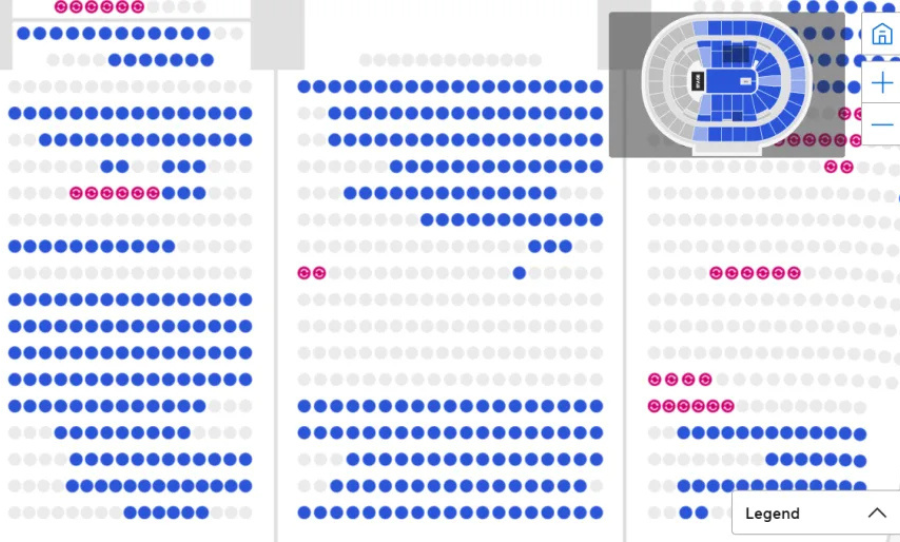
When a tour struggles to move tickets, entire venue maps can end up flooded with blue, thus, the shorthand fans are using to describe weak sales and growing tour cancellations.
Fans point to a combination of soaring ticket prices, travel costs, accommodation expenses, and plain exhaustion from constant touring announcements.
In short: people have hit their concert spending limit.
That sentiment lines up with broader industry data.
According to studies from Pollstar and The Wrap, the average concert ticket price was around $82 in 2020.
By 2025, that number had climbed to nearly $120, and in 2026, reports suggest the average ticket now sits around $144.
That’s before parking, hotels, merch, ‘convenience fees,’ and the psychological damage of buying an $11 bottle of water.
Several major artists have already faced speculation around weak ticket sales and cancellations.
Post Malone canceled dates on his tour, officially citing album delays.
Though, reportedly, some venues remained largely unsold ahead of launch.
Meghan Trainor cancelled her 2026 tour citing work-life balance, but fans quickly pointed to heavily blue Ticketmaster maps as another possible factor.
Meanwhile, The Pussycat Dolls abruptly cancelled nearly all North American tour dates without giving much of an explanation.
Other artists linked to the wider “blue dot fever” phenomena include Demi Lovato and Zayn Malik.
Eventually, even the most dedicated concertgoer has to look at their bank account, stare at a sea of blue dots, and admit they can only survive one emotionally devastating Ticketmaster queue at a time.