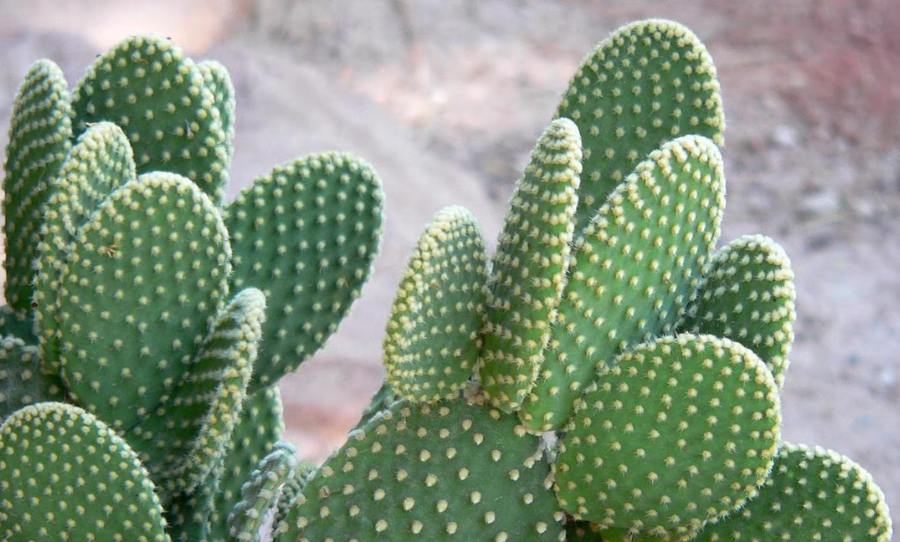
This Queensland town was nearly faced with a prickly pear disaster.
A variety of poisonous prickly plants have mysteriously appeared in a small opal mining town, hundreds of kilometres from the nearest capital city.
Three types of prickly pears were detected in the rural township Yowah in south western Queensland.
The cacti were quickly confiscated and destroyed by biosecurity teams.
The common prickly pear is notorious for its ability to adapt to arid land and repopulate quickly, leaving vast Australian landscapes up for grabs.
However, Australians are not allowed to own or sell the succulents, which are listed as a National Weed of Significance.
The land which the cacti were discovered on was mostly unpopulated, as the owners who lived nearby were in and out, fossicking for opals.
The cacti was left unattended to grow wildly, as is often the case for prickly pear sightings.
Many plant-fans unknowingly propagate dangerous species, the common prickly pear blending into any other succulent collection.
Prohibited cacti circulate Australian gardens via unofficial sources, like Facebook Marketplace listings and clippings from friends.
Paroo Shire Mayor Suzette Beresford has urged people to buy cacti only from reputable sources, like nurseries, as the council investigates the situation.
It seems the prickly pear has not escaped the garden and was destroyed after its removal, stamping out any possibility of the plant spreading further.
In rural Australia, invasive cacti poses a great threat to wildlife and humans alike.
Often prickly pears can trap and maim animals, or break off into smaller pieces transported around by kangaroos.
Proper disposal of dangerous cacti by contacting the local council is essential, as regular garbage disposal is how the species often spreads.