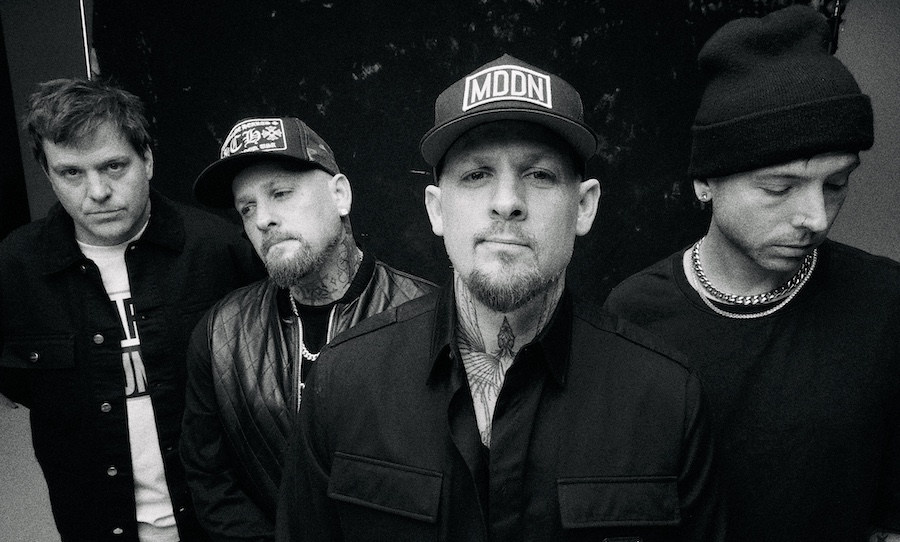
Joel and Benji Madden open up about creative freedom, aging as musicians, and the “healthy fear” that still precedes every show.
After nearly three decades, Good Charlotte is back, not just with a new album, but with a renewed spirit.

For their first Australian tour in eight years, Joel and Benji Madden sat down to reflect on a journey that has come full circle.
They discuss the raw nerves of their first basement gig, the evolution of their brotherly dynamic from conflict to unbreakable partnership, and how their highly-anticipated eighth album, Motel Du Cap, marks a return to the unconscious, authentic creativity of their early days.
This is more than a comeback; it’s a celebration of resilience, acceptance, and the anthems that defined a generation.
General sale tickets open on October 20 here, and you can sign up for pre-sale tickets here!
View this post on Instagram
Happy: Do you remember your first gig as Good Charlotte? And how does that feeling of being on stage compare to today?
Joel Madden: I remember our first gig was in a friend’s basement. A kid at school was having a little party, and they had a band. It was our first gig; we probably had five songs.
Benji Madden: I still have the setlist.
Joel: I remember being terrified. I didn’t turn around and face the audience—you could call it an audience, it was a basement party, maybe 20 or 30 people max—and I was just terrified.
I had no idea what I had gotten myself into, but I wanted to do it so bad.
From when we started the band, we were viciously getting after it, trying to find shows. We went to a Beastie Boys concert, and that was our first concert ever.
That was the night we decided we’re starting a band, and the next day we started the band, literally. We didn’t even know how to play our instruments.
We just wanted to be a band so bad, and we just started doing everything we possibly could. We were teenagers, 15, 16, just trying to figure it out.
Benji: I have the first setlist from Phil Miller’s basement. I framed it.
I even included a hall pass because one of the teachers at school thought it was cool that we had a band, and he gave me a hall pass so we could take some of the risers out of the music room to make a stage.
I saved it. That’s our first setlist, framed. I don’t think any of these songs made any records, but I’m sure I have a cassette of some of them somewhere. This is actually 30 years ago.
Happy: So, how has the feeling changed from back in those days? I imagine you’re not terrified with your back to the crowd anymore.
Joel: No. You know, I would say that kid is still in me, and I still have those nerves.
I remember what those nerves feel like because I feel them every time before we go on stage.
We played Aftershock a few days ago in front of about 50,000 people, and those nerves still come right back. You’re about to walk on stage and you think, “Will they like me?” It makes you feel like a kid.
It’s like fear for two seconds, like you’ve got to jump out of a plane. And then you go on stage and you learn how to tame it. By the first chorus of the first song, you’re riding the wave.
If you’ve surfed enough big waves, you know how to do it, and it’s really fun. I think it’s a healthy fear.
Benji: It means you’re human and you’re not numb to it. I never want to be numb and checked out.
I think it’s actually kind of sweet to feel that way because you care. To me, it’s like a humility. You want people to like you, that’s human.
I think we always have to keep a little bit of that inner child. I’m glad, I feel the same way. I hope we never lose it.
Happy: Coming back to the setlist, do you think you would be able to play any of those songs just off the top of your head?
Joel: I think so.
Benji: I bet we could play maybe not the whole song, but a verse and chorus of like two of those songs, maybe three. It would be vague, though!
When I look at that list, I definitely remember three songs. I guess you could say they are real songs, even if we never recorded them for an album.
Happy: With over 25 years of touring and eight albums, how has the brother dynamic evolved over these years?
Benji: It’s definitely just grown and matured.
Joel: In our 20s, we didn’t know how to communicate; that was tough. In our 30s, we started to really learn, I think we started working on ourselves, going to therapy.
We learned how to talk. But in our 40s, it’s been amazing. We have the best partnership you could ever dream of.
Benji: We don’t fight.
In our 20s, we definitely did. We just didn’t know how to talk about anything. Now, I can’t remember our last argument, genuinely.
It must have been years. That just comes with time, maturity, and growing up. It helps when you both have kids, are married, and have things that are more important than anything else.
Now when we hang out, it’s pretty sweet.
Happy: Speaking of, it kind of reminds me of the Oasis brothers’ dynamic. What do you think of their recent reunion?
Benji: I love it.
Joel: I think it’s beautiful. My deep hope is that they’re getting as much out of it as we are, because I love those guys. I don’t even know them, and I love them.
To have a brother is a blessing. It’s to have a partner that will have your back no matter what, someone to dream with, to problem-solve with. I see them together; they’re such a dynamic duo.
We grew up listening to them. We went to an Oasis show when we were younger, and that was part of what inspired us. I went to the show they did in LA, and it was awesome.
I just looked at them and thought, “Man, I hope they’re getting as much out of this as I am watching them.”
Happy: Back to Good Charlotte. What’s your creative process like when writing a track, and could you compare the evolution from your first album to your last?
Benji: I think it’s been like this long road back to the same place. On our first album, it was completely unconscious.
Pick up a guitar, start strumming, humming a melody, coming up with lyrics. You don’t know what you’re singing about; you’re just puking up feelings and emotions.
You’re rhyming words and singing what feels good, and then you find out what the songs are about.
We did that for the first couple of records, and then we started thinking about it. We had a lot of people in our ear wanting us to be competitive.
We wanted to make everyone happy, make the critics and fans happy. Your whole creative process gets put in a box. I think we had to navigate through that for a while.
We found our way all the way back to being in a place where we are completely unconscious. We don’t give a fuck what’s going on.
We’re just creating for the genuine exercise of creating. We didn’t premeditate; we just said, “I wonder what will come out.”
If you listen to the first album and you listen to this latest album, I think there’s a through line. I think you can feel some of that energy, tapping into that same place.
I think that’s pretty special. It’s full circle.
Joel: We came out in ’99, we got signed, we’d never been on a plane. We were kids from a small farm town in the middle of nowhere in Maryland, and we ran away from that.
Only to come all the way back around to where today, if you ask me what I want to be, I just want to be a guy from a farm town who doesn’t know much about what’s going on in the world, who just wants to make his music and be happy.
I had to go all the way around the long way to find out that I was who I was supposed to be in the first place. It’s about accepting yourself.
It took that long-ass journey to get to a place where I just accept myself and I’m happy with who I am and where I’m from. I don’t need to be more than that.
Happy: What was the moment you said to yourself, “Wow, we’ve really made something here”?
Benji: Honestly, I thought that from day one. We set our first band practice and said, “Oh my God, we’re going to be huge,” and we couldn’t even play a song all the way through. That’s how naive we were.
Joel: I thought we were pretty special until we got out into the world, and then I kind of doubted it and struggled with it.
I think it’s been more recently that I look back and think, “You know what, man? We did something pretty special.” I’m happy with it.
People can decide what the legacy is; that’s fine with me. To land here with my best friend after 25 years… I don’t need anything else. I don’t want to live in a different house, be in a different band, or be married to someone else.
I just want what I got. The life that that kid built with his brother. I’m proud of it. This record was an exercise that we, as a band and as brothers, did for ourselves.
For the first time since the early days, I’m just happy with it. I’m proud of the band, that we’ve been together since high school, and that we all like each other. When we get together, it’s nice. We’re better now, live, than we’ve ever been.
I think some of that comes with age. I think we’ve aged well as musicians. When you see us play live, you can feel all that experience in the show. It’s substantial.
Benji: We know more than we could have as kids; we didn’t have the experience back then.
Joel: So, it’s full circle. It feels like you went all the way around the long way to end up kind of where you started, where it was good enough at the time. And it’s good enough now, for me.